

Most Amazon sellers imagine dropshipping challenges as a sourcing problem — “if I could find the right suppliers, the money will follow.” In reality, sourcing is only the surface layer. Operations are the true battlefield.
When you’re fulfilling a few dozen orders a month, you can chase suppliers, manually upload tracking, and explain delays to customers. But when you cross 500, 1,000, or 5,000 monthly orders, the business changes. Amazon doesn’t care if your supplier slept late, missed a scan, or didn’t package well — they only measure performance.
At Ecommatic, our virtual teams run the full backend engine for sellers who want the profits of 2-Step Dropshipping without the operational stress. This is how we make high-volume fulfillment feel effortless.
The Moment an Order Comes In: Controlled Intake, Not Automation Chaos
Every Amazon order starts the same way—but how it’s handled determines everything that follows.
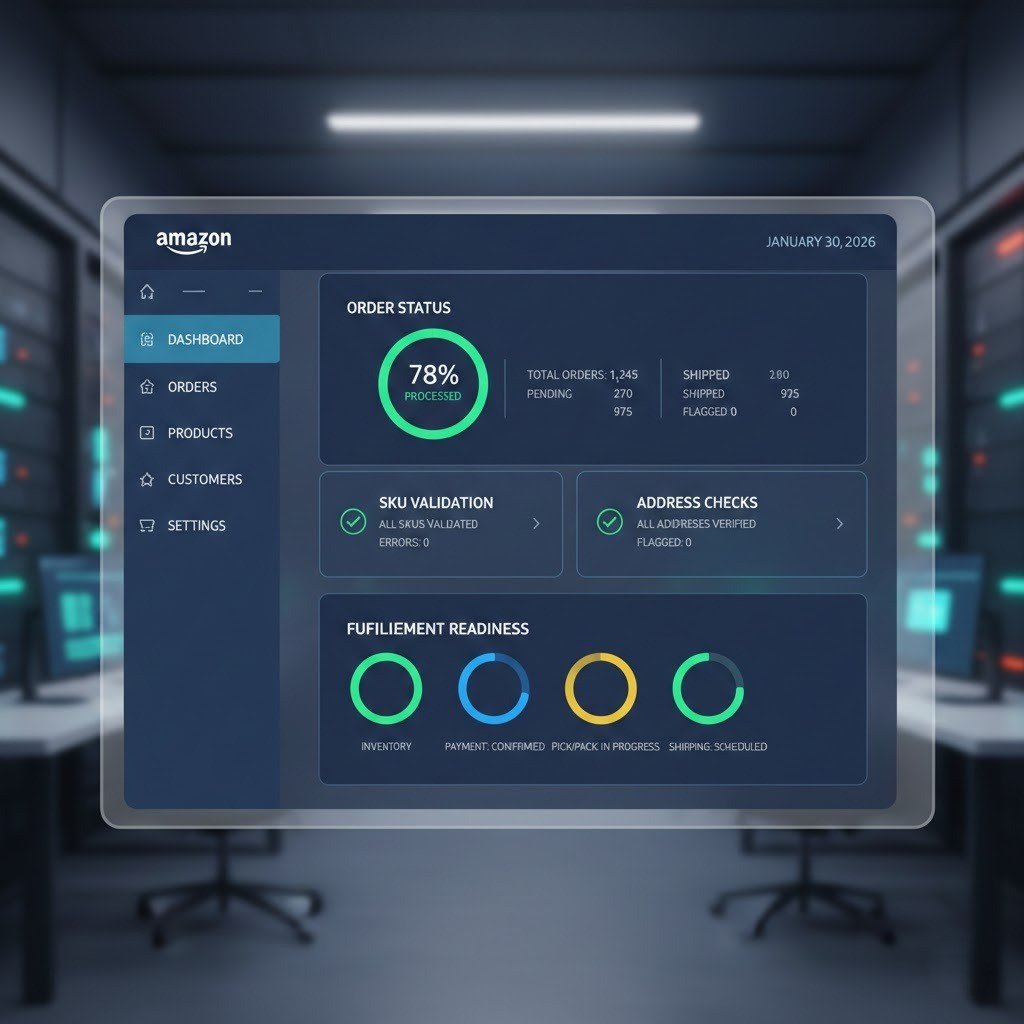
The moment an order is placed, it enters our order intake system, where it is reviewed before any supplier is contacted. We never push orders directly to suppliers without verification. This single rule prevents most fulfillment disasters.
We validate SKU accuracy, order quantity, delivery location, and fulfillment eligibility before moving forward. Orders that fail any validation are paused and reviewed manually.
Supplier Mapping and Inventory Validation: Preventing Cancellations Before They Happen
Cancellations are one of Amazon’s most sensitive metrics. Most happen because sellers assume suppliers have stock.
We don’t assume—we confirm.
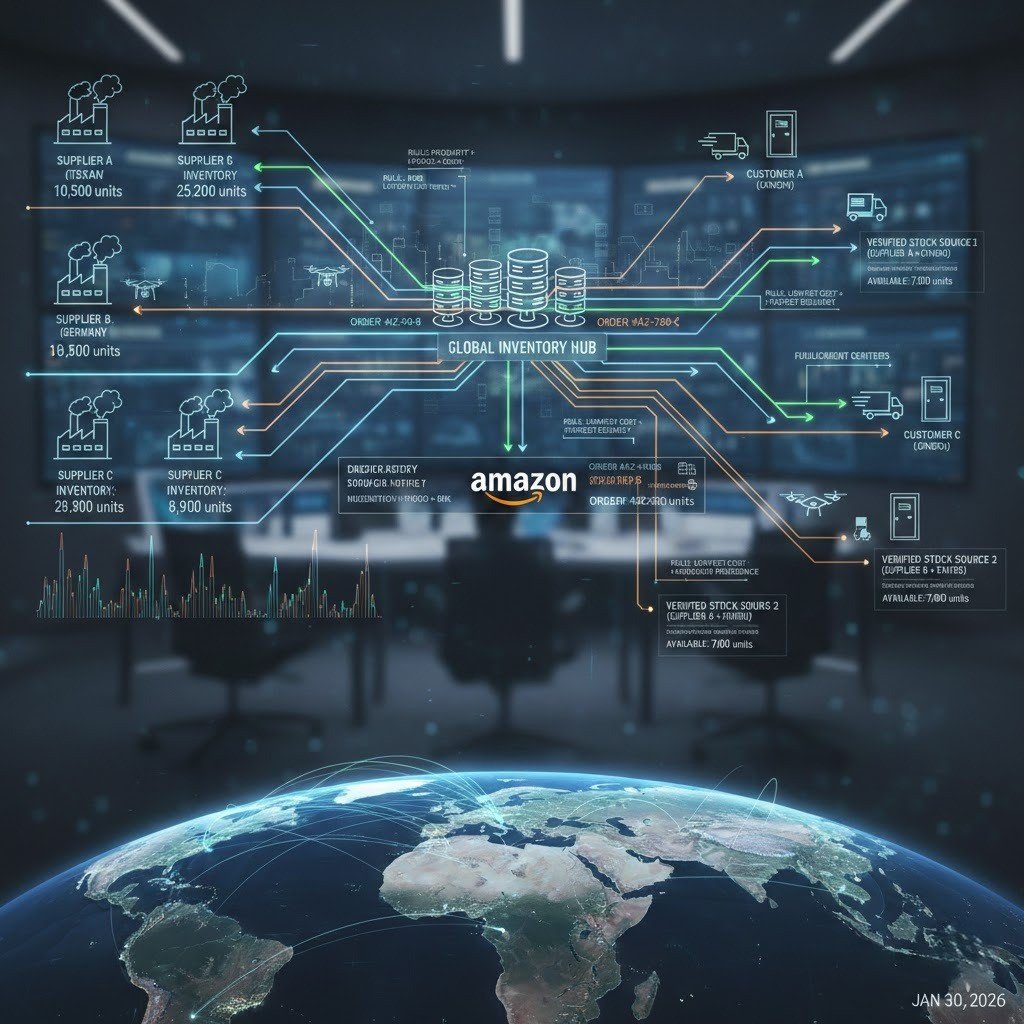
Every order is mapped to a pre-vetted supplier and checked against real-time availability. If stock is limited or unstable, we reroute or pause fulfillment instead of risking a cancellation.
This daily discipline is one of the main reasons our clients maintain stable cancellation rates even at high order volume.
Margin Verification Before Fulfillment: Protecting Profit, Not Just Sales
High order volume means nothing if margins quietly disappear.
Before any order is fulfilled, we verify profitability by checking supplier cost, shipping cost, Amazon fees, and current selling price. If costs spike unexpectedly, the order is paused and reviewed.
This step protects sellers from fulfilling dozens of orders at a loss due to supplier price changes or fee adjustments.
Real-world insight:
Many sellers only notice margin loss at month-end. By then, the damage is already done. Our system stops that from happening.
Smart Supplier Routing: One Order, Multiple Backup Plans
No serious dropshipping operation relies on one supplier.
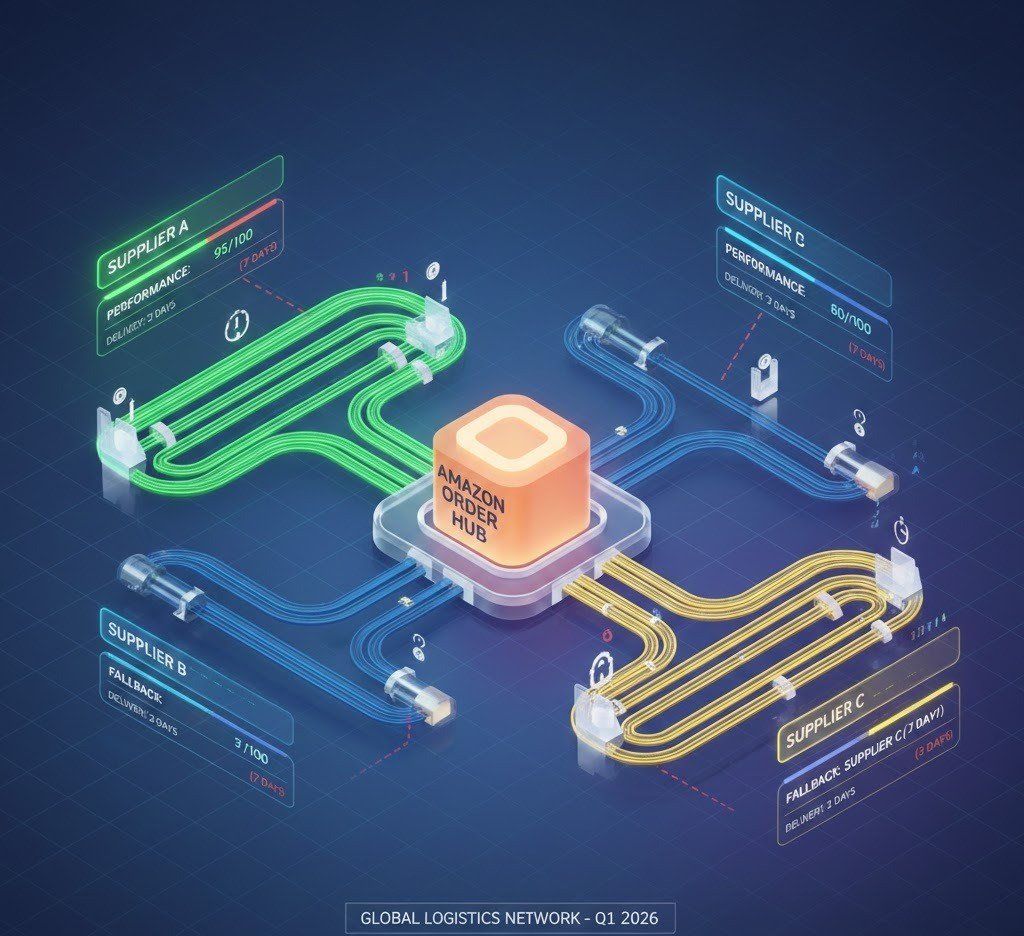
We maintain multi-supplier routing logic, selecting the best fulfillment option based on price, delivery speed, location, and reliability history. If one supplier is delayed or out of stock, orders are seamlessly rerouted.
This redundancy is what allows us to fulfill 1,000+ orders monthly without operational bottlenecks.
Dispatch and Shipment Confirmation: Where Timing Becomes Critical
Once an order is placed with the supplier, the clock starts ticking.
We actively monitor dispatch timelines to ensure orders ship within Amazon’s promised handling time. Supplier confirmations, shipping labels, and dispatch notices are tracked daily.
If dispatch is delayed, we intervene immediately instead of waiting for Amazon to penalize the account.
Tracking Validation: The Most Overlooked Risk in Dropshipping
Tracking is not a formality—it’s compliance.
We validate every tracking number before uploading it to Amazon. This includes checking carrier accuracy, scan activation, and delivery timeline alignment with Amazon’s expectations.
After upload, tracking is monitored until delivery is complete. If tracking stalls or shows anomalies, action is taken immediately.
Delivery Monitoring and Customer Experience Control
From Amazon’s perspective, delivery is part of the seller’s responsibility.
We monitor delivery progress, identify delays, and proactively communicate with customers when needed. Clear communication reduces “Where is my order?” messages, negative feedback, and A-to-Z claims.
A smooth delivery experience directly improves seller metrics and customer trust.
Exception Handling: Where Experience Matters Most
With high volume, exceptions are inevitable. What matters is how fast and professionally they are handled.
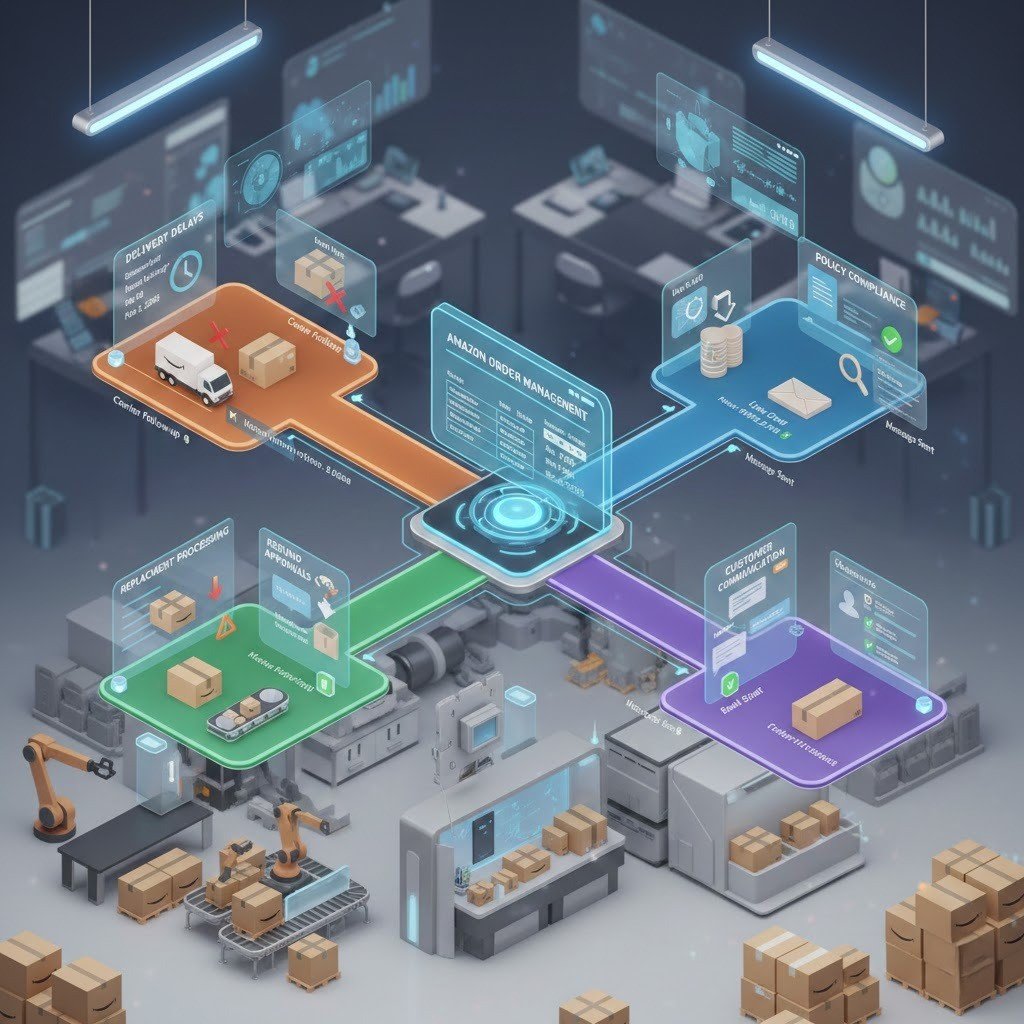
We manage delays, lost shipments, damaged items, address issues, and return requests using structured SOPs. Each case is evaluated based on cost, compliance, and customer impact.
Returns, Refunds, and Post-Order Accountability
Returns and refunds can quietly destroy profitability if unmanaged.
We analyze each case to determine responsibility—supplier, carrier, buyer, or Amazon—and choose the most cost-effective resolution that remains policy-compliant.
This ensures customer satisfaction without unnecessary margin loss.
Human Oversight Behind Automation
Automation helps with speed, but judgment protects accounts.
Our virtual assistants and operations managers review edge cases, make routing decisions, and handle customer communication with context and care. This hybrid approach—automation plus human oversight—is what keeps systems stable at scale.
Why This System Works at Scale
Fulfilling 1,000+ orders monthly is not about working harder—it’s about working systematically.
Our clients benefit from:
- Fewer cancellations and late shipments
- Stable account health
- Predictable margins
- Better customer reviews
- Stress-free scaling
Final Thoughts: Scaling Amazon Fulfillment Without Chaos
Most Amazon sellers fail at scale because their operations don’t evolve with volume.
At Ecommatic, we build fulfillment systems designed for growth, compliance, and long-term sustainability. We don’t just move orders—we protect businesses.
If you’re serious about scaling Amazon dropshipping in the USA, smooth fulfillment isn’t optional. It’s foundational.
And it’s exactly what we do—every single day.