
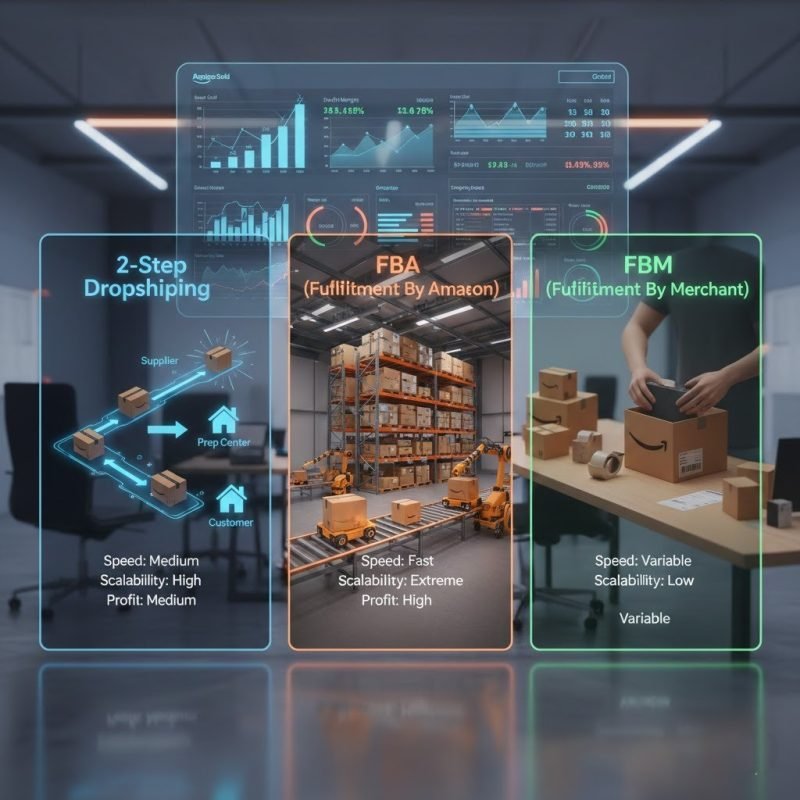
When you start selling on Amazon, one of the biggest decisions you must make is how you will fulfill your orders. Your fulfillment method shapes your margins, workload, scalability, and your chances of staying compliant with Amazon policies.
At Ecommatic, we manage hundreds of stores for clients, and we’ve seen firsthand how each fulfillment model performs under real-world situations. This guide breaks down 2-Step Dropshipping vs FBA vs FBM in a practical, humanized way—so you can understand which model works best for your business, your budget, and your long-term goals.
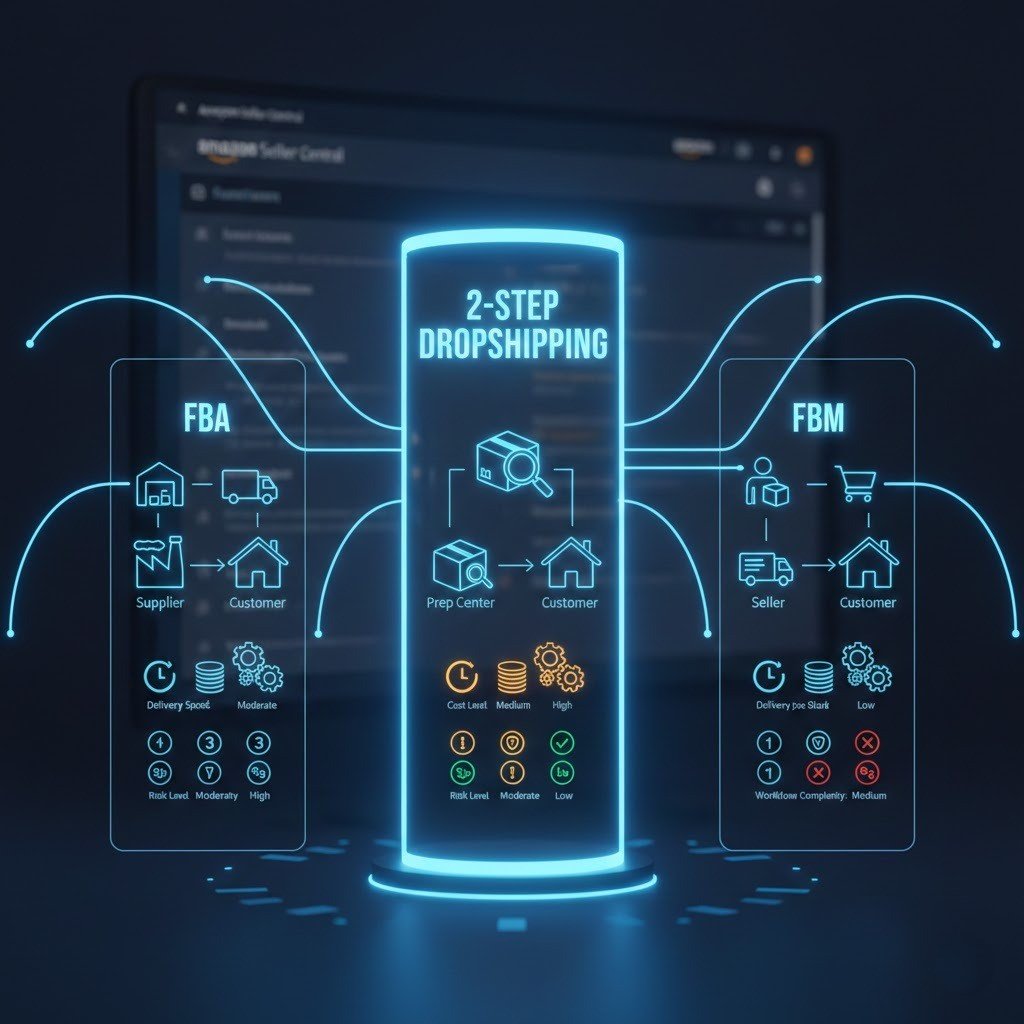
Understanding the 3 Core Amazon Fulfillment Models
Before diving into pros and cons, let’s simplify what each model really means in daily operations.
1. 2-Step Dropshipping (The Modern Compliant Method)
This is NOT traditional retail dropshipping.
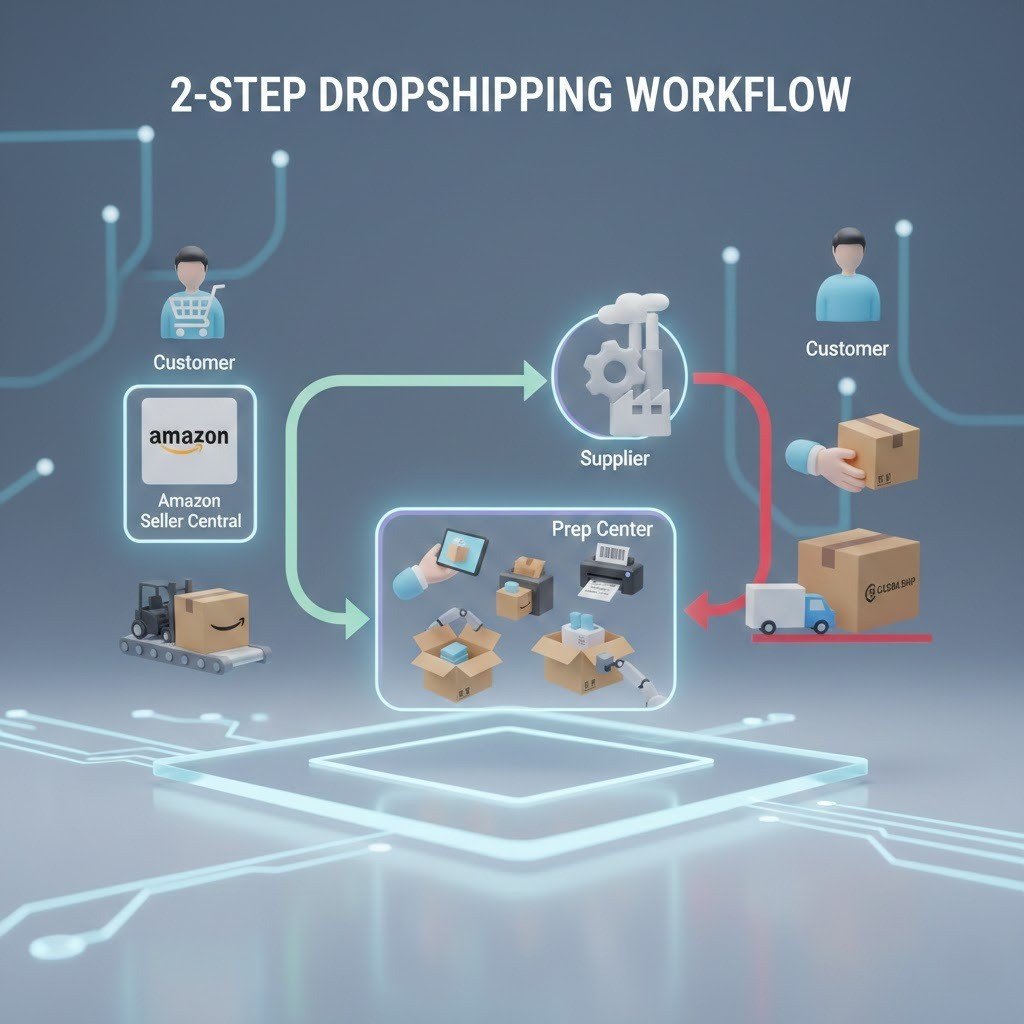
This is a compliant, Amazon-approved hybrid system where products are sent first to a prep center, repacked correctly, labeled with your store details, and then shipped to customers.
How It Works (Humanized Workflow)
- Customer places an order on your Amazon listing.
- Your supplier ships the product to a prep center, NOT to the customer.
- The prep center removes supplier invoices, repackages the item, adds correct FNSKU/labels.
- The prep center ships to your customer using your carrier details.
- Amazon sees a clean, compliant shipment.
Why Sellers Love 2-Step Dropshipping
- Low upfront investment (no bulk inventory risk).
- Fast product testing—launch multiple SKUs without massive budgets.
- Compliant when done correctly.
- Flexible scaling and unlimited product selection.
Challenges You MUST Expect
- Higher shipping costs compared to bulk inventory.
- Prep center fees add an extra layer of cost.
- More steps = more operational coordination.
- You must monitor delivery times to avoid high late shipment rate.
Best For:
Entrepreneurs with moderate budgets, product testers, dropshipping businesses, and sellers who want flexibility without major upfront investment.
2. Amazon FBA (Fulfilled by Amazon)
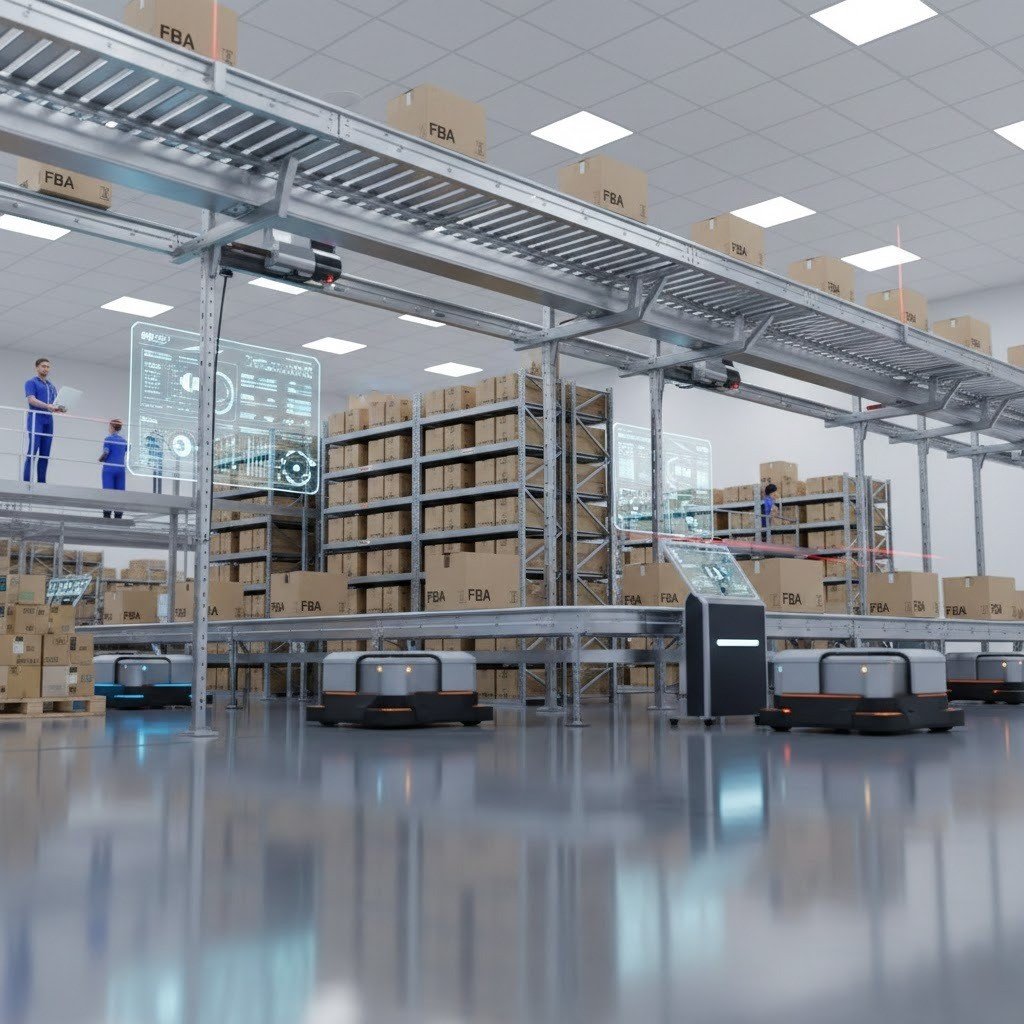
FBA is Amazon’s premium fulfillment system. You send bulk inventory to Amazon warehouses, and Amazon handles picking, packing, shipping, customer support, and returns.
How It Works
- You buy inventory in bulk.
- Ship it to Amazon’s fulfillment centers.
- Amazon handles everything once the customer orders.
Why Sellers Choose FBA
- Prime badge increases conversion rates instantly.
- Fast delivery boosts Buy Box win rate.
- Amazon handles customer service—reduced workload.
- Best margins on fast-moving, popular items.
Challenges of FBA
- Requires significant upfront investment.
- Storage fees + long-term storage penalties.
- Risk of unsold inventory.
- Amazon may lose items or miscount (common & frustrating).
Best For:
Brands, bulk wholesalers, private label sellers, and high-volume operations ready for larger investments.
3. Amazon FBM (Fulfilled by Merchant)
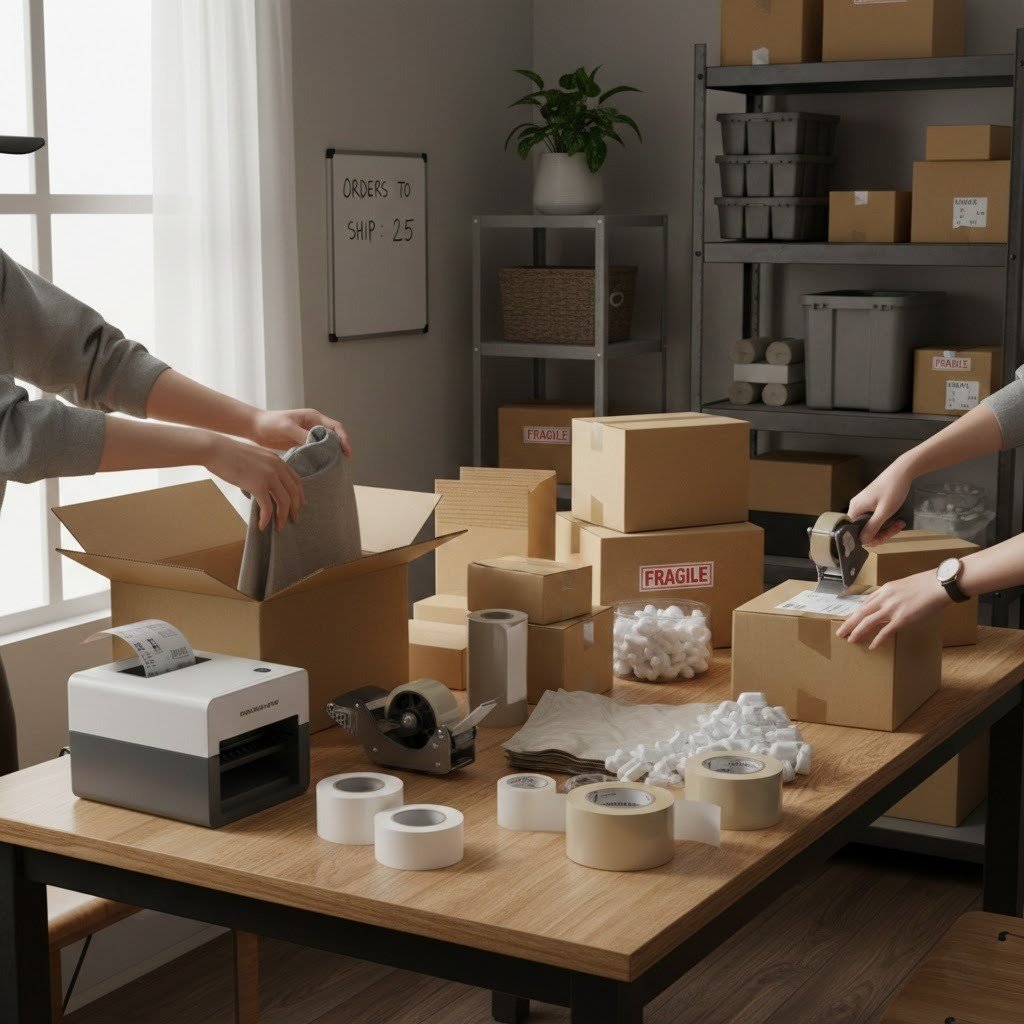
FBM is the simplest model—you ship products yourself or through a third-party warehouse.
How It Works
- Customer buys → you pack → you ship → you manage support and returns.
Why Sellers Use FBM
- Full control over packaging and branding.
- No Amazon storage fees.
- Low upfront inventory requirements.
- Often used for oversized or heavy items where FBA is too expensive.
Challenges of FBM
- You must manage all logistics.
- Harder to compete with FBA sellers.
- Slower delivery = lower conversion rate.
- More operational errors (late shipments, cancellations, returns issues).
Best For:
Sellers with their own warehouse, handmade items, or heavy/oversized products.
2-Step Dropshipping vs FBA vs FBM: Real-World Comparison
1. Startup Cost
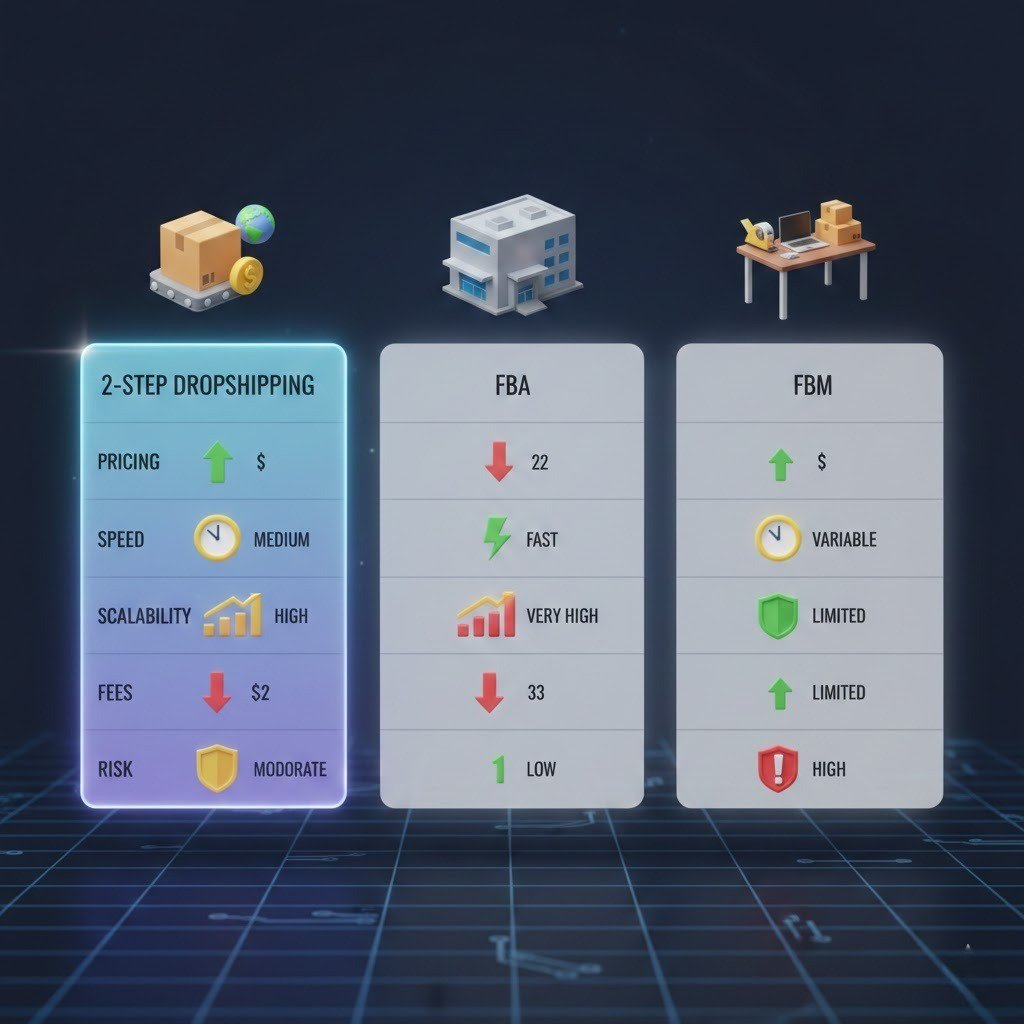
- 2-Step Dropshipping: Lowest (pay per order).
- FBA: Highest (bulk inventory + shipping + prep).
- FBM: Moderate (own packaging + shipping costs).
2. Profit Margins
- 2-Step: 10–25% (depends heavily on supplier & prep costs).
- FBA: 20–40% (best margins when scaling).
- FBM: 15–30% (varies based on shipping rates).
3. Delivery Speed
- FBA: Fastest (Prime).
- 2-Step: Medium (depends on supplier → prep → customer flow).
- FBM: Variable (depends on your shipping setup).
4. Amazon Policy Risk
- 2-Step: Highest risk if done incorrectly.
- FBA: Safest (Amazon handles compliance).
- FBM: Safe if your metrics remain strong.
5. Scalability
- FBA: Best for long-term scaling.
- 2-Step: Good for testing & early scaling.
- FBM: Limited by your operational capacity.
Which Fulfillment Model Should You Choose?
Choose 2-Step Dropshipping if…
You want to test products, start quickly, and avoid big upfront costs.
Choose FBA if…
You are ready to build a long-term brand and invest in bulk inventory.
Choose FBM if…
You have your own warehouse or ship specialized products.
Final Verdict (From Real-World Client Management)
Most sellers start with 2-Step Dropshipping, identify winning products, and then transition those winning SKUs to FBA for higher margins and stability.
FBM remains a support model for unique or oversized products.
This hybrid approach gives the highest ROI and the lowest long-term risk.
Conclusion: Ecommatic Can Help You Choose the Right Model
Your fulfillment model shapes your success on Amazon. The wrong choice can lead to:
❌ low margins
❌ slower delivery
❌ account health issues
❌ customer complaints
❌ suspensions
Ecommatic helps sellers across the USA choose the right model based on:
✔ Your budget
✔ Your product category
✔ Your risk tolerance
✔ Your long-term goals
We manage everything—from product research to shipping, account health, listing creation, PPC, and full store automation.
If you want hands-off, professionally managed Amazon operations, we’re ready to help you scale safely and sustainably.