
Amazon doesn’t hate dropshipping — it hates chaotic fulfillment that confuses customers. When you run a disciplined, transparent, and fast 2-step dropshipping operation, you solve the problems Amazon cares about: consistent delivery, accurate tracking, low returns, and great customer experiences. Those are the metrics Amazon optimizes for, and that’s why it rewards sellers who deliver them.
This article walks you through every parameter you need to control to make your 2-step dropshipping channel Amazon-friendly and profitable: supplier selection, prep-center operations, packaging, tracking, pricing, margins, performance metrics, automation, risk mitigation, legal/IP, and scaling. I’ll include practical SOP ideas, cost considerations, tooling recommendations, and a sample workflow you can follow.
1) The principle: What makes 2-step different and why Amazon prefers it
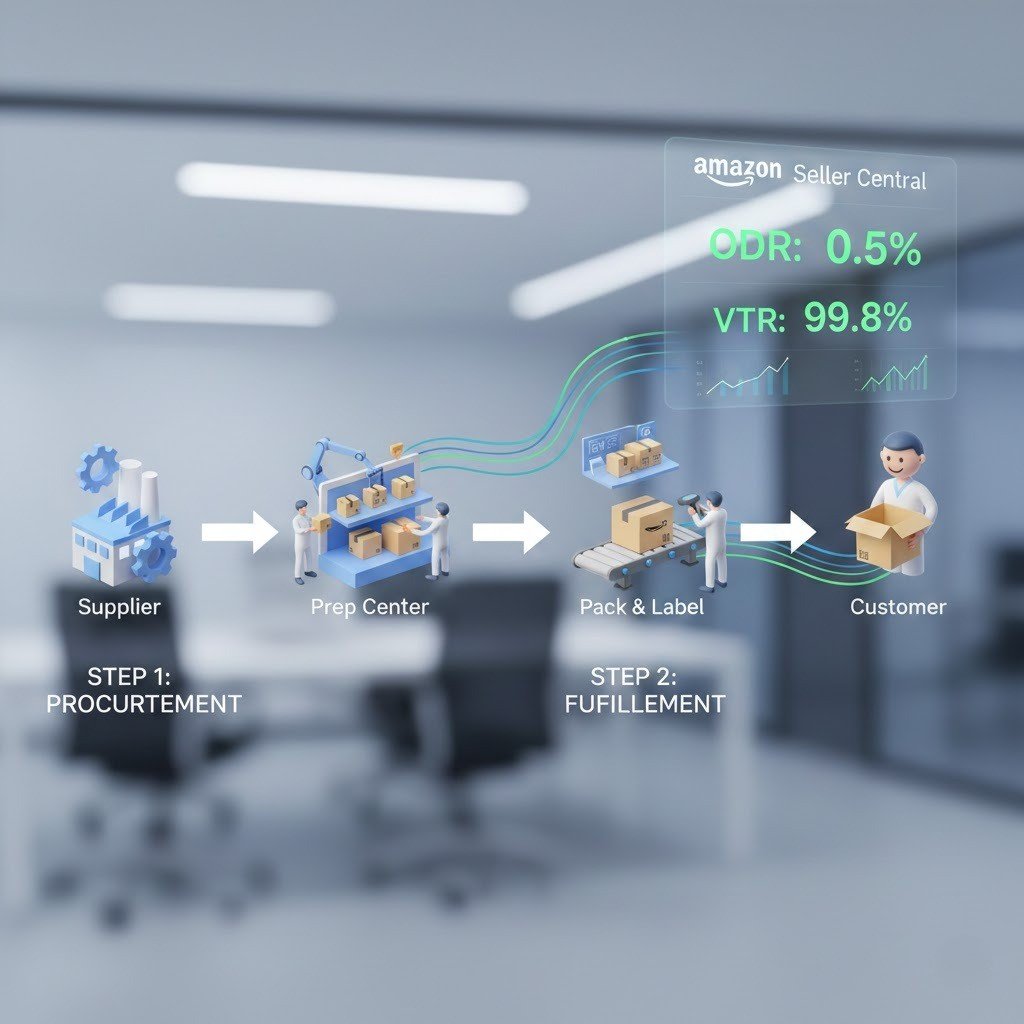
Traditional dropshipping ships directly from a retailer to the customer — that often shows third-party receipts, retail packaging and inconsistent tracking. Amazon rejects that because it breaks the assumption that the seller is the merchant of record.
Structured 2-step flips that by inserting a validated operations layer (a prep center or 3PL) that:
- Removes any retailer identifiers (no receipts, store labels)
- Inspects and repackages when needed
- Adds your labels/return address so Amazon sees you as the seller of record
- Ensures tracking and condition checks before the package goes to the buyer
Amazon “likes” this because the customer experience is consistent and predictable — exactly what Amazon promises Prime buyers every day.
2) Supplier vetting: the foundation of predictable fulfillment
Good suppliers create predictable lead times, consistent SKU condition, and accurate stock reporting. Bad suppliers create returns, A-to-Z claims, and ODR spikes.
What we evaluate and enforce:
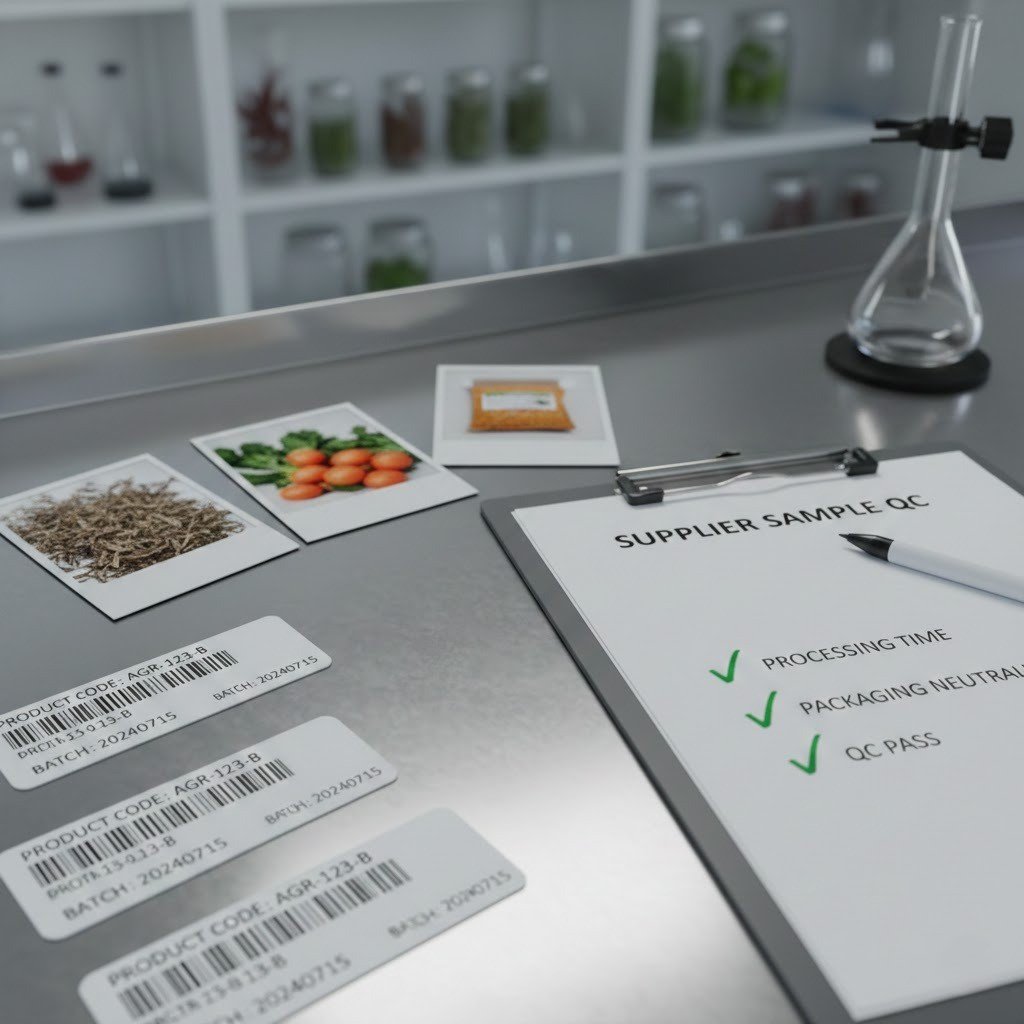
- Processing SLA: supplier must confirm orders within 0–48 hours. Any supplier slower than 48 hours is a red flag.
- Dispatch SLA to prep center: how long between supplier shipping the parcel and the prep center receiving it.
- Packaging exposure: supplier must either ship to prep center blank or use neutral cartons when instructed.
- Lot control & serials: for electronics or regulated goods, traceability must exist.
- Sample and QC program: samples for every SKU, monthly QC sampling, photo proofing.
- MOQ & price stability: volatile pricing kills margins; negotiate stability clauses.
- Return handling capability: supplier’s policy should allow returns to prep center, not the supplier’s store.
- Documentation access: invoices, COA (certificate of authenticity) for brands, MSDS for regulated goods.
Practical SOP you can use: require suppliers to send a sample photo within 24 hours of first shipment; require ASN (advance ship notice) with SKU, lot, and weight.
3) Prep center operations: the 2-step engine
Prep centers are where the compliance happens. Your SOPs at the prep center determine whether a shipment is Amazon-clean or an account risk.
Critical prep center processes:
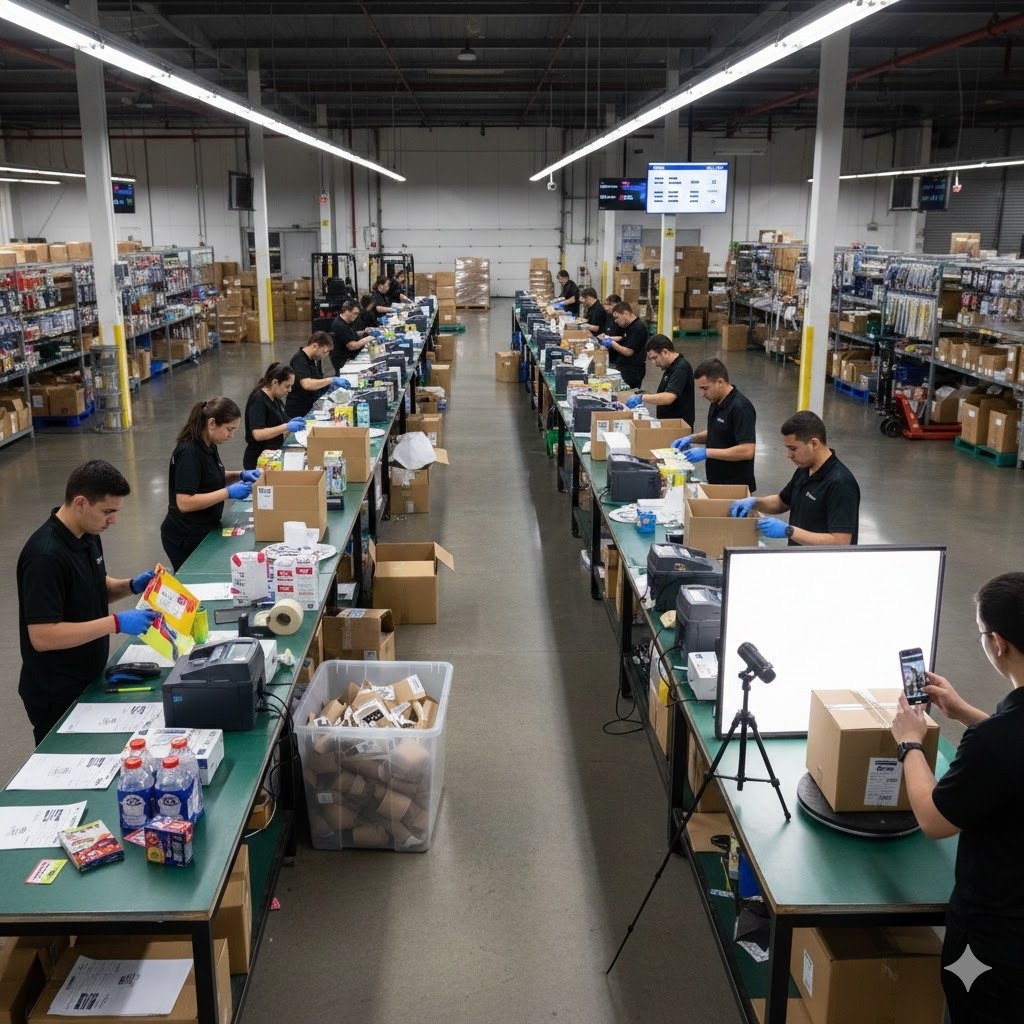
- Receiving & verification: compare items to ASN and PO; photograph damaged items.
- De-branding: remove retailer slips, stickers, or branded packaging before repack.
- Repackaging & kitting: use neutral boxes, add padded protection as needed, insert your packing slip (if required).
- Labeling: apply your FNSKU/private label barcode or merchant shipping label; ensure scannable placement.
- Quality checks: random sample inspection (e.g., 5% of units) for damage, missing parts, correct variant.
- Tracking accuracy: capture carrier tracking correctly and test one sample tracking flow per batch.
- Return readiness: attach return labels where applicable or store return instructions in portal.
- Photo proof & upload: scan & upload photos of packed units to your dashboard for dispute evidence.
SOP example: “No package ships without at least one pre-ship photo and a readable barcode; any packaging with third-party branding triggers a re-pack step.”
Cost elements to expect:
- Receiving fee per pallet or box
- Per unit inspection fee ($0.10–$1 depending on complexity)
- Repack/label fee ($0.50–$2)
- Storage fee if they hold prepped stock
This is the operational heartbeat — pay for a good prep center and your risk falls dramatically.
4) Packaging & branding rules — what you must enforce
Amazon’s dropshipping policy is simple: the customer must not see another retailer’s identity. That means:
- No retailer logos, receipts, or packing slips inside the package.
- Neutral outer packaging, secure inner protection, and your return address.
- For items with required documentation (warranties, user manuals), make sure they’re generic or branded to you.
Additional best practices:
- Include an insert card with your contact info and a friendly note — not an incentive for reviews (that violates TOS).
- IF selling branded items, include manufacturer documentation only if allowed and if it doesn’t identify another retailer.
SOP snippet: “All inbound cartons from suppliers must be declared on ASN; any inbound carton that contains consumer invoices triggers quarantine.”
5) Tracking and carrier selection — your metrics depend on them
Amazon cares about three tracking things: being traceable, being timely, and matching the shipped item. Here’s how to protect all three:
Carrier rules we follow:
- Use Amazon-approved carriers in each marketplace.
- Avoid carriers with high scan delays or poor visibility.
- Require suppliers/prep centers to upload tracking immediately after handoff.
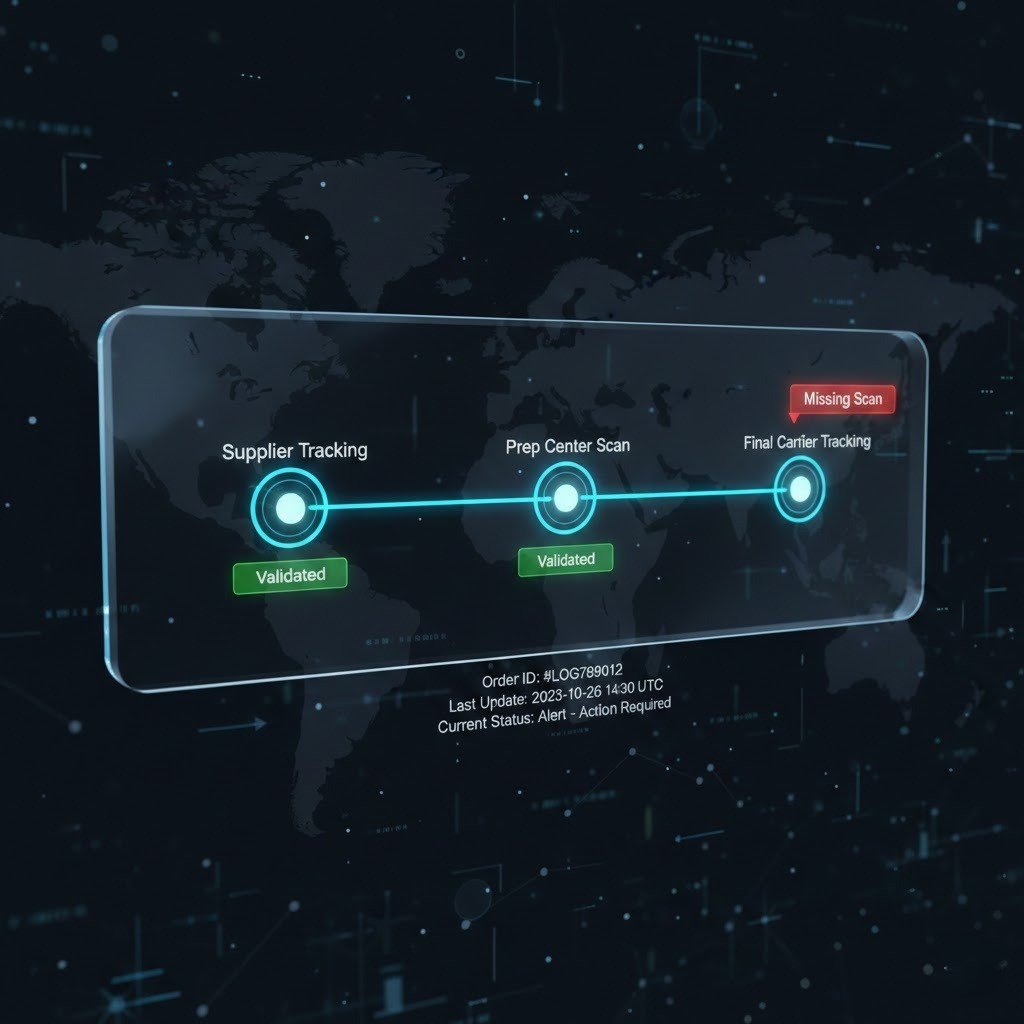
- Automate tracking validation: if tracking doesn’t show movement within 24 hours, trigger escalation.
Tracking best practice: require both the supplier’s airwaybill/tracking and the prep center’s final tracking — if the supplier’s tracking shows delivered to prep center, also confirm prep center scanned it in.
Why it matters: invalid tracking or stale tracking numbers = late shipment rate (LSR) and invalid tracking rate (VTR) issues — both are fast ways to get warnings.
6) Pricing, margins, and repricing — how we protect profit
Protecting margins is a mix of negotiation, automation, and rules.
Key parameters:
- COST STACK: supplier unit cost + inbound shipping to prep center + prep fees + outbound shipping + Amazon referral fee + payment processing fees + returns cost.
- PRICE FLOOR: a per-SKU minimum selling price that covers all costs plus target profit. Never allow automatic repricers to drop below the floor.
- PAYMENT TERMS: negotiate NET30/45 with suppliers when possible to improve cashflow.
- BULK BREAKS: secure price tiers as sales scale. If a supplier can offer lower per unit at higher volume, plan to convert winners to bulk buys or hybrid FBA later.
- REPRICER RULES: allow setting strategies (match lowest within margin, aggressive Buy Box pursuit when enough margin exists, conservative when stock is low).
- PROMOTION PLAN: define when and how to discount — e.g., only during clearance or planned sales windows; avoid reactive price wars.
Example cost breakdown (generic):
- Supplier cost: $25
- Supplier → prep center shipping: $4
- Prep center fees: $1.50
- Outbound shipping to customer: $6
- Amazon referral & closing: $6.50
- Total cost ≈ $43
- Target selling price $59–69
- Net margin ≈ 13–28% depending on ad spend and returns
We use margin protection and real-time repricing with human overrides to ensure we never sell in the red.
7) Performance metrics Amazon watches — and how we keep them healthy
Amazon judges sellers on tight KPIs. We monitor and enforce these thresholds constantly:
Primary metrics to protect:
- Order Defect Rate (ODR) — target < 1%
- Late Shipment Rate (LSR) — target < 4% (aim < 2%)
- Pre-fulfillment Cancel Rate — target < 2.5%
- Valid Tracking Rate (VTR) — target ≥ 95%
- Return Rate — category dependent; keep it minimal
How we keep them healthy:
- Real-time alerting system (message, Slack, email) for any metric drift
- Daily reconciliation of shipped vs. tracking vs. Amazon’s records
- Escalation SOP when supplier misses SLA (refund, cancel, or expedite)
- Customer service scripts and refund timelines to defuse complaints quickly
Pro tip: keep a small buffer in processing time. If your supplier promises 2-day handling, plan for 3 business days in your workflow to avoid LSR spikes.
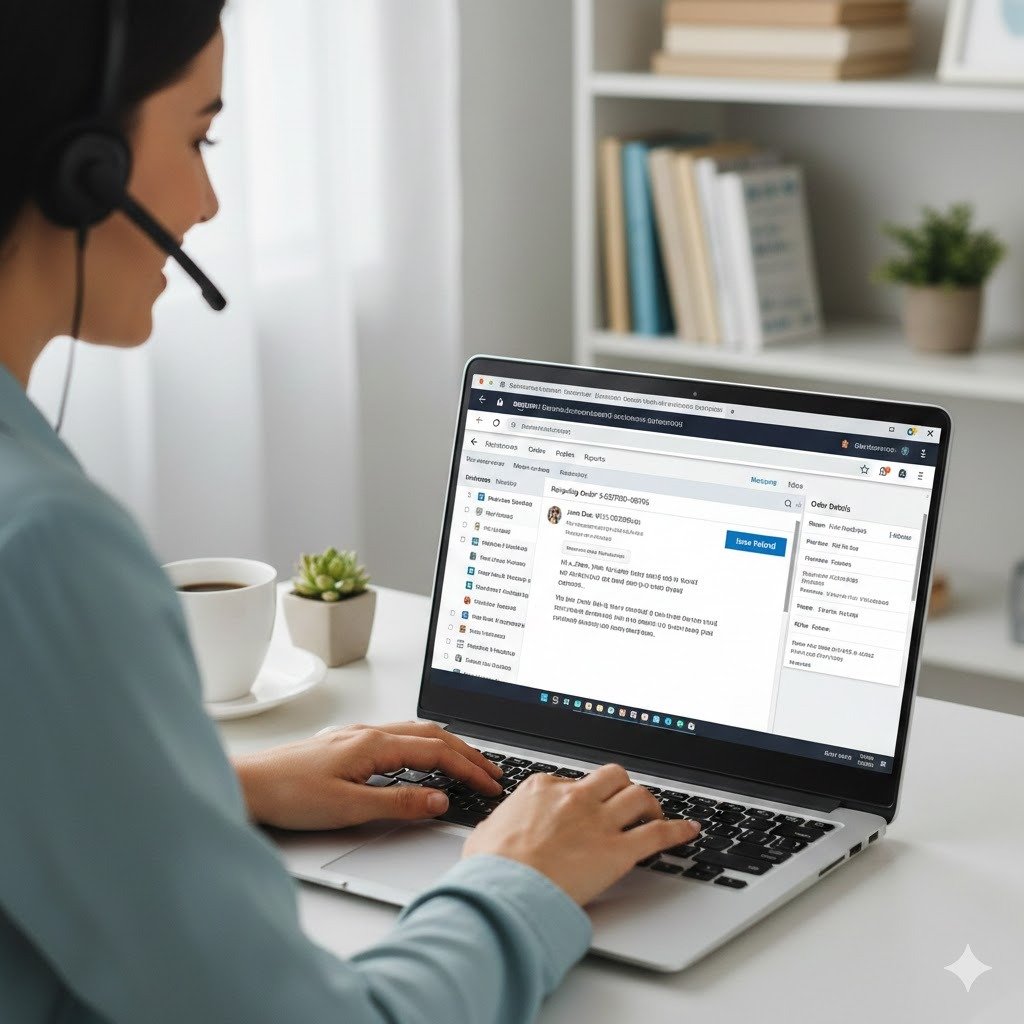
8) Customer service & returns — own the buyer experience
Customers don’t care about your internal process — they care about solutions. Owning returns and communications is what makes Amazon treat you like a true merchant.
What we do:
- Respond to messages within 12 hours (Amazon requires 24, but faster reduces escalation).
- Offer simple return experiences and quick refunds where appropriate.
- Use templated but personalized responses to common issues (wrong item, damaged, late).
- If the issue is supplier or prep center related, document and escalate — then compensate the buyer immediately.
- Keep a returns analytics dashboard to identify problem SKUs and suppliers.
Remember: how you fix a problem matters more than the problem itself. Fast, human, empathetic responses often convert a frustrated buyer to a loyal customer.
9) Account health routines — daily, weekly, monthly
Protecting your account requires a schedule of checks:
Daily:
- Confirm all orders have valid tracking uploaded.
- Monitor ODR, LSR, VTR dashboards.
- Check for new policy warnings or buyer claims.
Weekly:
- Audit 2–3 random orders per SKU for QC photos and packing evidence.
- Review supplier performance reports.
- Reconcile inventory availability vs. listings.
Monthly:
- Review return reasons and escalate systemic issues.
- Negotiate supplier pricing and payment terms.
- Review repricer rules and margin floors.
- Check IP and brand registry alerts.
This cadence catches small issues before they cascade.
11) IP, brand, and legal considerations
Selling branded items without authorization invites suspensions. Even if you’re sourcing legitimately, you must prove authenticity.
Policies to follow:
- Use authorized distributors for brand goods or obtain resale permission.
- Keep invoices and proof of purchase accessible for Amazon requests.
- Avoid selling trademarked bundles or modified branded goods without permission.
- For regulated categories, ensure COAs, test reports, and permits are stored and accessible.
If Amazon asks, respond with clear supplier invoices, photos, and chain of custody. Prep center photos + supplier invoices are a powerful defense.
12) Cost modeling & deciding when to convert to bulk (hybrid path)
2-step is perfect for testing, but winners often convert to hybrid models for margin lift: small batch FBA or bulk FBM.
Decision triggers to convert:
- Consistent daily sales for 30–60 days.
- Low return rate (< X% based on category).
- Supplier confirmed ability to fulfill larger PO with price breaks.
- Forecasted demand that justifies storage fees vs. prep center fees.
Cost model example:
- Prep center cost per unit: $1.50–$3
- FBA inbound and storage amortized per unit: $0.50–$2 (depends on velocity)
- If bulk discount reduces supplier cost by $2–$4 per unit and FBA amortized cost is lower than ongoing prep fees, convert.
We run financial simulations before converting, including worst-case scenarios for returns and long-tail demand drops.
13) Scaling: how to keep the system reliable when volume rises
Scaling introduces complexity. To scale without breaking metrics:
- Add additional vetted suppliers for redundancy.
- Increase prep center capacity or add secondary prep partners.
- Move touchpoints earlier (e.g., earlier QC, more frequent supplier audits).
- Implement tiered repricer modes (aggressive during low competition windows, conservative during peak season).
- Maintain a rolling buffer of cashflow for supplier minimums and unexpected returns.
Don’t scale until ODR and LSR are consistently within target ranges for 60+ days.

14) A short case scenario (anonymized) — how this looks in practice
Client A: launched with a 2-step model for home fitness accessories. First 30 days: tested 15 SKUs, discovered 2 winners. Supplier fees were slightly high, so margins were thin. Ecommatic actions:
- Switched winners to a prep center with lower per-unit fees.
- Negotiated supplier price break at 500 units.
- Implemented repricer minimums and Buy Box rules.
- Converted top SKU to small FBA batch (2 pallets) to reduce outbound cost.
Result: margin on top SKU improved from 12% to 28% after bulk conversion and FBA optimization; ODR remained < 0.5% throughout.
15) Practical checklist you can use tomorrow
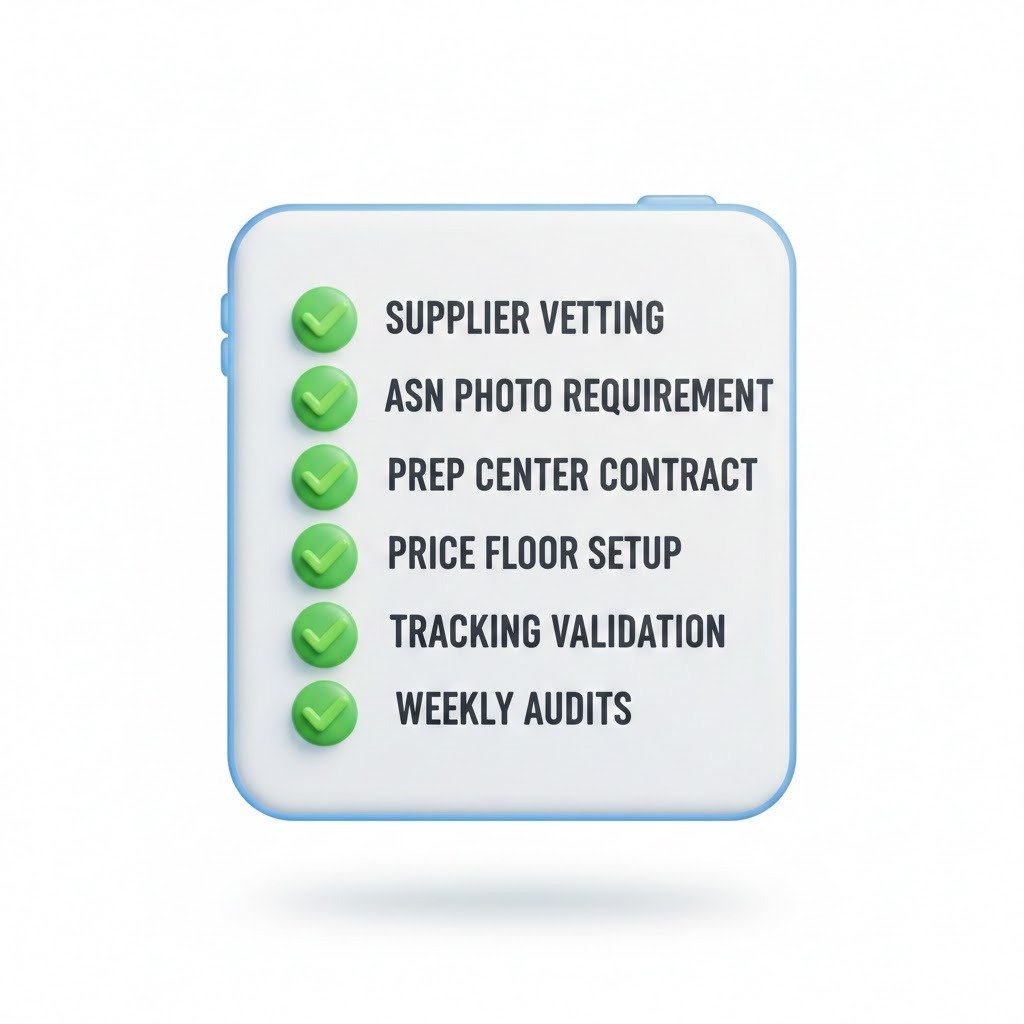
- Vet suppliers for 48-hour SLA and neutral packaging.
- Require ASN + sample photo for every inbound shipment.
- Contract a prep center with photo proof & barcode scanning.
- Set a per-SKU price floor in your repricer.
- Automate tracking validation and alerts for missing scans.
- Run daily metric dashboard and escalate any drift.
- Audit 3 random orders per SKU weekly for QC photos.
- Keep supplier invoices and chain of custody documents accessible.
- Use a hybrid conversion plan for winners (convert to bulk/FBA after 30–60 days).
Final — Why Amazon LOVES you when you run this properly
When you run a disciplined, documented 2-step operation Amazon sees: predictable delivery, clean tracking, low claim rates, and a seller that treats buyers well. That’s exactly the behavior Amazon promotes through better search placement, Buy Box access, and long-term trust. If you remove the chaos and deliver the experience Amazon promises its customers, Amazon rewards you.
If you want this handled for you, Ecommatic builds, audits, and operates compliant 2-step dropshipping channels—supplier vetting, prep center onboarding, repricing rules, account health monitoring, customer support, and scaling. We operate these channels for US clients every day and can set up a transparent, measurable program to protect your margins while keeping Amazon happy.
Ready to build a 2-step dropshipping channel that Amazon actually loves? Tell us a bit about your product niche and we’ll outline a customized onboarding plan with costs and a 60-day success roadmap.