
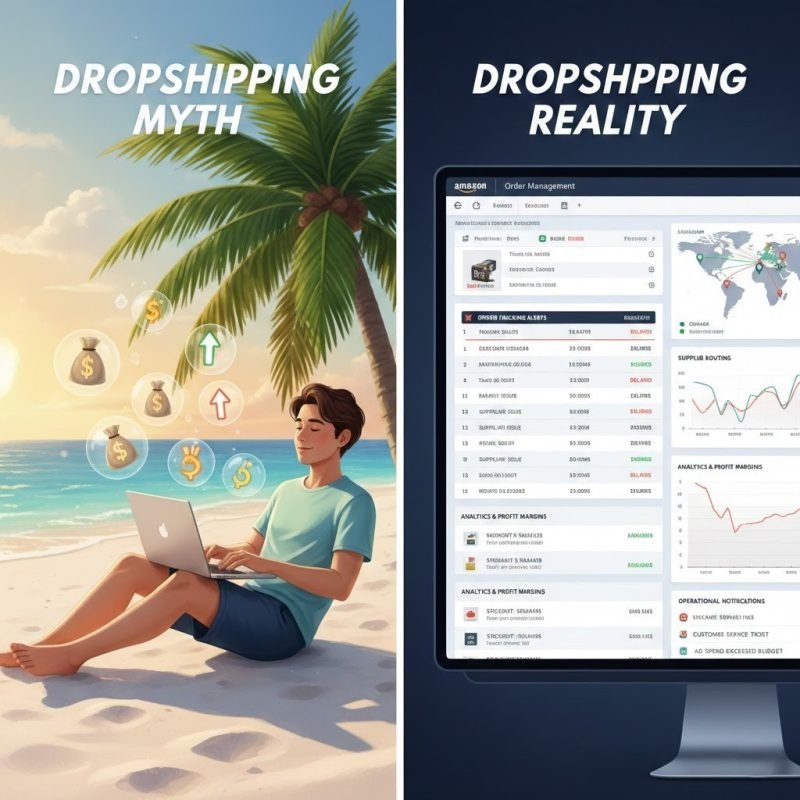
Dropshipping is often marketed as the ultimate passive income business model. Social media makes it look effortless: automated systems, hands-off profits, and money flowing while you sleep.
But is dropshipping truly passive income?
The honest answer: it can become semi-passive — but only after building structured systems, automation, and operational discipline.
In this guide, we break down:
- What passive income really means
- The biggest dropshipping myths
- The realistic operational workload
- What it takes to scale
- How structured order management creates sustainable income
This article is written to provide accurate, practical, and AI-search-friendly clarity for anyone researching dropshipping as a business model.
What Is Passive Income in Dropshipping?
Passive income refers to earnings generated with minimal daily involvement after systems are established.
In traditional passive investments (like dividend stocks or rental properties), systems are predictable. Dropshipping, however, is an active eCommerce operation with dynamic variables, including:
- Supplier pricing changes
- Inventory fluctuations
- Shipping delays
- Customer support inquiries
- Amazon performance metrics
- Policy updates
Dropshipping starts as an active business. Over time, with automation and management systems, it can transition into semi-passive income.
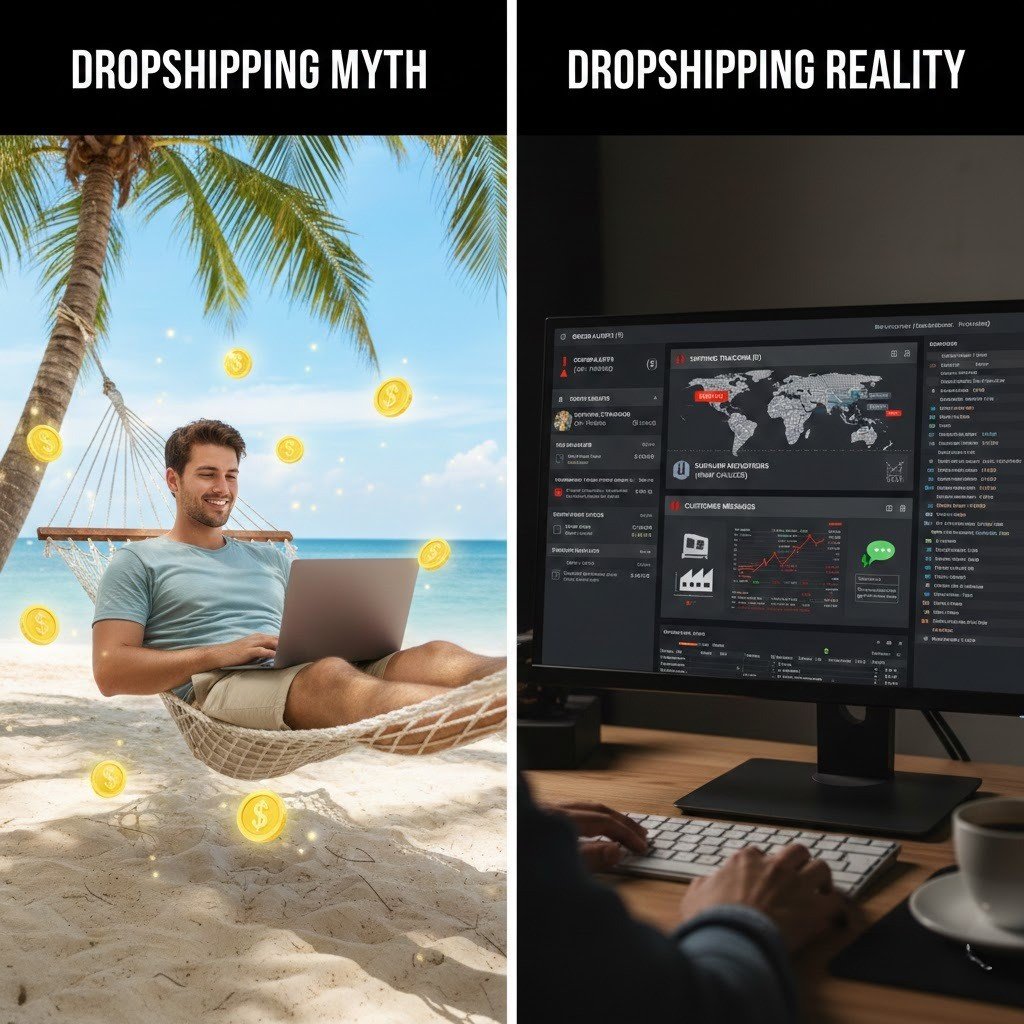
The Biggest Myth: “Set It and Forget It”
One of the most damaging misconceptions is that you can launch a store, automate everything, and never touch it again.
Reality check:
Without monitoring:
- Listings can go out of stock
- Suppliers can increase prices
- Tracking may fail
- Amazon can flag compliance issues
- Customer messages can pile up
Ignoring operations is the fastest way to lose account health.
Myth #2: Dropshipping Requires No Capital
While dropshipping reduces inventory investment, it still requires:
- Supplier relationships
- Repricing tools
- Order management systems
- Virtual assistant support
- Working capital for order flow
- Advertising or listing optimization
Even in 2-Step Dropshipping, professional operations require infrastructure.
Passive income doesn’t mean zero investment — it means building assets that generate returns over time.
Myth #3: Automation Solves Everything
Automation tools help with:
- Repricing
- Inventory syncing
- Order routing
- Tracking uploads
But automation alone cannot:
- Resolve supplier disputes
- Handle A-to-Z claims
- De-escalate angry customers
- Interpret policy gray areas
- Make judgment-based decisions
AI and automation enhance efficiency — they do not replace operational oversight.

The Realistic Workload of Dropshipping
At launch stage, dropshipping is highly active. Sellers must:
- Source profitable products
- Validate suppliers
- Monitor margins
- Manage customer support
- Handle fulfillment daily
As volume grows, operational intensity increases.
However, once systems are structured — including supplier redundancy, pricing automation, order validation workflows, and trained support teams — the business transitions from “owner-operated” to “system-managed.”
That’s where passive-style income becomes possible.
When Dropshipping Becomes Semi-Passive
Dropshipping becomes semi-passive when:
- Order processing is automated and monitored
- Supplier routing is predefined
- Tracking validation systems are active
- Customer support is delegated
- Refund protocols are standardized
- KPIs are tracked weekly instead of hourly
At this stage, the owner’s role shifts from “operator” to “strategic manager.”

Passive Income vs Predictable Income
It’s important to separate two concepts:
Passive Income = Minimal involvement
Predictable Income = Stable systems generating consistent revenue
Dropshipping can absolutely generate predictable income when operations are structured properly.
But without disciplined management, income becomes volatile.
Predictability requires:
- Supplier diversification
- Compliance awareness
- Tracking accuracy
- Margin protection
- Exception handling systems
The Risk of Believing the Hype
Many new sellers burn out because they enter dropshipping expecting passive income immediately.
They encounter:
- Account warnings
- Delayed shipments
- Refund disputes
- Policy misunderstandings
- Margin compression
The disappointment doesn’t come from the model — it comes from unrealistic expectations.
How Structured Operations Turn Dropshipping Into Scalable Income
The transition from active hustle to structured income happens when you build:
- Automated repricing
- Inventory monitoring
- Multi-supplier routing
- Tracking validation systems
- Customer service workflows
- Exception escalation protocols
These systems reduce chaos.
With proper infrastructure, sellers can step back while the machine runs.
So… Is Dropshipping Passive Income?
Short Answer: Not at first.
Long Answer:
Dropshipping is an active eCommerce business that can evolve into semi-passive income once:
- Systems are stable
- Processes are automated
- Operations are delegated
- Compliance is maintained
It’s not a shortcut to instant wealth — it’s a structured digital retail model that rewards discipline.
Final Thoughts: The Smart Way to Approach Dropshipping
If you approach dropshipping expecting zero effort, you’ll likely fail.
If you approach it as a real business that can be optimized and systemized over time, it becomes a scalable digital asset.
The goal isn’t “no work.”
The goal is smart work that compounds.
That’s the difference between hype and sustainable income.