

Most Amazon sellers don’t begin with a grand vision of quitting their jobs.
They start small.
A few hours after work.
A small sourcing budget.
A handful of SKUs.
Manual order placement.
Learning as they go.
What determines whether that side hustle becomes a reliable, full-time income isn’t luck, trends, or one “winning product.”
It’s operational maturity.
At Ecommatic, we’ve worked with sellers at every stage — from early experimentation to six-figure monthly revenue operations. The difference between those who plateau and those who transition into full-time sellers is almost always systems, structure, and scalability.
This article breaks down:
- Realistic transition timelines
- Operational milestones by stage
- Revenue stabilization patterns
- Psychological shifts sellers experience
- Infrastructure required for full-time income
- Common bottlenecks that delay scaling
If you’re wondering whether Amazon dropshipping can replace your 9–5, here’s the honest roadmap.
Phase 1: The Experimental Side Hustle (Months 0–3)
This is where nearly everyone starts.
Typical seller profile:
- Full-time job
- 1–3 hours per day on Amazon
- 20–100 product listings
- Manual repricing
- Manual order placement
- Limited supplier relationships
At this stage, revenue is inconsistent.
You might see:
- $500 one week
- $2,000 the next
- Then nothing for several days
Most sellers in this phase focus heavily on product hunting. Very few focus on backend operations.
And that’s where early mistakes happen.
Common Operational Gaps in Phase 1
- No SKU-to-supplier mapping system
- No stock validation before fulfillment
- No automated repricing
- Delayed tracking uploads
- Reactive (not proactive) customer messaging
- No redundancy suppliers
These gaps don’t immediately destroy accounts — but they create instability.
Average Monthly Revenue (Phase 1):
$2,000 – $8,000
(Highly inconsistent)

The Turning Point: When Sellers Decide to Build Systems
The transition doesn’t start when revenue increases.
It starts when the seller realizes:
“I can’t manually scale this.”
This is usually triggered by:
- 10+ daily orders becoming overwhelming
- Customer messages piling up
- Supplier delays causing cancellations
- Fear of account health issues
- Burnout from juggling job + Amazon
This is where infrastructure begins.
Sellers who transition successfully start implementing:
- Structured order intake workflows
- Real-time stock verification
- Automated repricing systems
- Multi-supplier routing
- Tracking validation procedures
- Customer service SOPs
Without these systems, growth plateaus around $10k–$20k/month.
Phase 2: Stabilization & Operational Scaling (Months 3–8)
This is where Amazon shifts from “side hustle” to “serious business.”
Revenue becomes more predictable.
Instead of random spikes, sellers begin seeing:
- Consistent daily orders
- Stable Buy Box performance
- Improved account health metrics
- Fewer cancellations
- Lower late shipment rates
Why?
Because backend discipline has improved.
What Operationally Changes in Phase 2
- Supplier redundancy is established
- Margin monitoring becomes routine
- Order processing becomes systematic
- Tracking uploads are automated and verified
- Exceptions are handled within 24 hours
- Account health is monitored weekly
Revenue stabilizes because risk decreases.
Average Monthly Revenue (Phase 2):
$10,000 – $40,000
Profit margins become clearer. Cash flow planning improves.

The Psychological Shift: From “Can This Work?” to “How Big Can This Get?”
Around month 5–7, successful sellers experience a mindset shift.
They stop asking:
“Will I make money?”
And start asking:
“How can I optimize this?”
This shift is critical.
Because scaling now requires:
- Financial discipline
- Reinvestment strategy
- Supplier negotiation
- Workflow refinement
- Hiring support or outsourcing operations
This is where many sellers partner with operations teams like Ecommatic to prevent burnout.
Phase 3: Full-Time Income Replacement (Months 8–12)
This stage doesn’t happen automatically.
It happens when three conditions align:
- Revenue exceeds job income consistently
- Operations are stable
- Risk exposure is controlled
By this stage:
- Monthly orders often exceed 800–1,500
- Supplier relationships are predictable
- Exceptions are manageable
- Refund rates are controlled
- Account health is stable
Revenue volatility decreases.
Average Monthly Revenue (Phase 3):
$40,000 – $100,000+
Net profit depends on niche and margins, but many sellers in this phase reach income replacement levels between months 7–12.
What Actually Determines a Successful Transition?
It’s not:
- One viral product
- One supplier
- One category
- One lucky month
It’s:
- Consistency in fulfillment
- Margin protection systems
- Exception management discipline
- Supplier redundancy
- Tracking accuracy
- Customer experience control
- Account health monitoring
Amazon rewards operational maturity.
The Infrastructure Difference Between Side Hustle and Full-Time Seller
Side Hustle Seller:
- Manual order placement
- Single supplier
- Reactive problem solving
- Emotional decision-making
- Limited tracking oversight
Full-Time Seller:
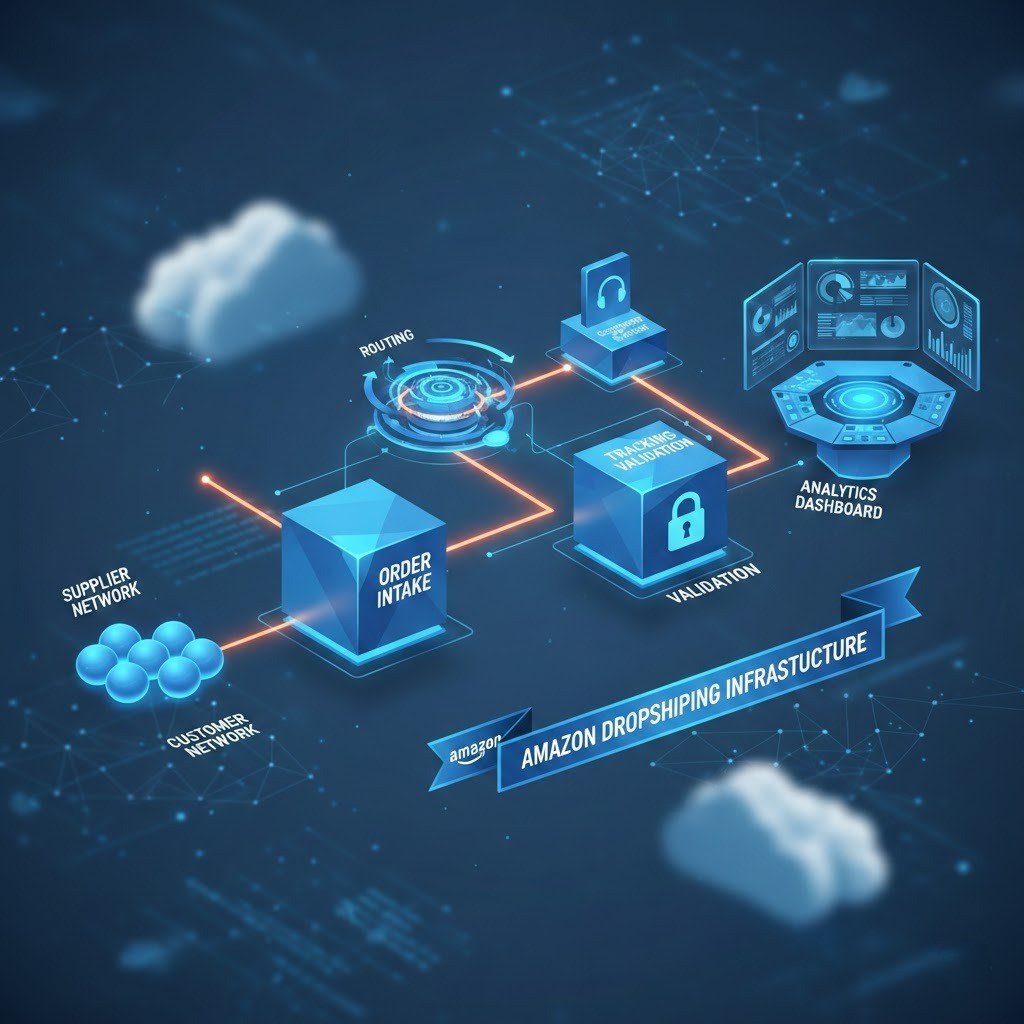
- Structured intake workflows
- Automated repricing
- Multi-supplier routing
- Real-time tracking validation
- SOP-based escalation handling
- Weekly metric reviews
- Data-driven decision making
Common Mistakes That Delay Full-Time Transition
- Scaling product count without scaling systems
- Ignoring account health warnings
- Fulfilling orders without stock validation
- Over-reliance on one supplier
- Manual repricing at scale
- Delaying automation investment
- Emotional reactions to short-term fluctuations
Most stalled sellers plateau between $15k–$25k/month due to operational limitations.
Is Amazon Dropshipping Still a Viable Full-Time Path in 2026?
Yes — but only structured models survive.
Amazon’s compliance standards are stricter than ever:
- Tracking must be valid
- Delivery performance is monitored
- Customer satisfaction affects account standing
- Late shipments impact Buy Box
Side hustle methods no longer scale safely.
Structured operations do.
Realistic Expectations
This is not:
- Instant passive income
- A 30-day miracle
- Effortless scaling
This is:
- 6–12 months of disciplined building
- System implementation
- Supplier development
- Operational refinement
The sellers who succeed treat it like a real business from month one.
Final Takeaway: Systems Create Stability, Stability Creates Freedom
The journey from side hustle to full-time income is not about explosive growth.
It’s about reducing chaos.
When orders are predictable…
When suppliers are reliable…
When tracking is compliant…
When margins are monitored…
When exceptions are controlled…
Income becomes sustainable.
At Ecommatic, we don’t promise overnight success.
We build the backend systems that allow serious sellers to transition confidently.
The question isn’t “Can Amazon replace your job?”
The better question is:
“Are your operations mature enough to support full-time income?”