

One of the most common questions new Amazon sellers ask is simple but loaded:
“How long will it take before I actually start making money?”
The honest answer is—it depends, but not in the vague way most people say it. Profit on Amazon follows a predictable timeline when the right systems, expectations, and execution are in place. What delays profitability is not Amazon itself, but mistakes made in the early stages.
At Ecommatic, we’ve worked with sellers at every stage—from brand-new accounts to scaled 2-step dropshipping operations in the USA. This article breaks down a realistic profit timeline, what happens at each stage, and what separates sellers who profit early from those who struggle for months.
Stage 1: Account Setup & Foundation (Week 1–2)
Before a single dollar is earned, Amazon requires groundwork. This stage is often underestimated, but it determines how smooth everything else will be.
During this phase, sellers focus on:
- Amazon account creation and verification
- Tax, banking, and identity setup
- Category approvals (if required)
- Initial compliance alignment
There is no profit at this stage, and that’s normal. Any seller claiming instant profits during setup is either skipping steps or taking risks that usually backfire later.
Stage 2: Product Research & Listing Creation (Week 2–4)
This is where most sellers either set themselves up for success—or delay profitability by months.
At this stage, sellers:
- Research demand-driven products
- Analyze competition and Buy Box behavior
- Source suppliers or prep centers
- Create optimized listings (titles, bullets, images, pricing)
Sales may start trickling in by the end of this phase, but profits are usually inconsistent. Early sales are more about testing and data collection than income.
Stage 3: First Sales & Learning Curve (Month 1–2)
This is where many sellers get emotionally tested.
Sales start coming in, but so do:
- Supplier delays
- Tracking issues
- Customer questions
- Pricing adjustments
- Unexpected Amazon fees
Profit at this stage is usually small or breakeven. Sellers who quit here often do so because they expected faster returns without realizing this phase is where systems are built.
At Ecommatic, this is where we focus heavily on:
- Order management discipline
- Tracking validation
- Customer communication
- Account health protection
This stage is not about earning big—it’s about not breaking the account.
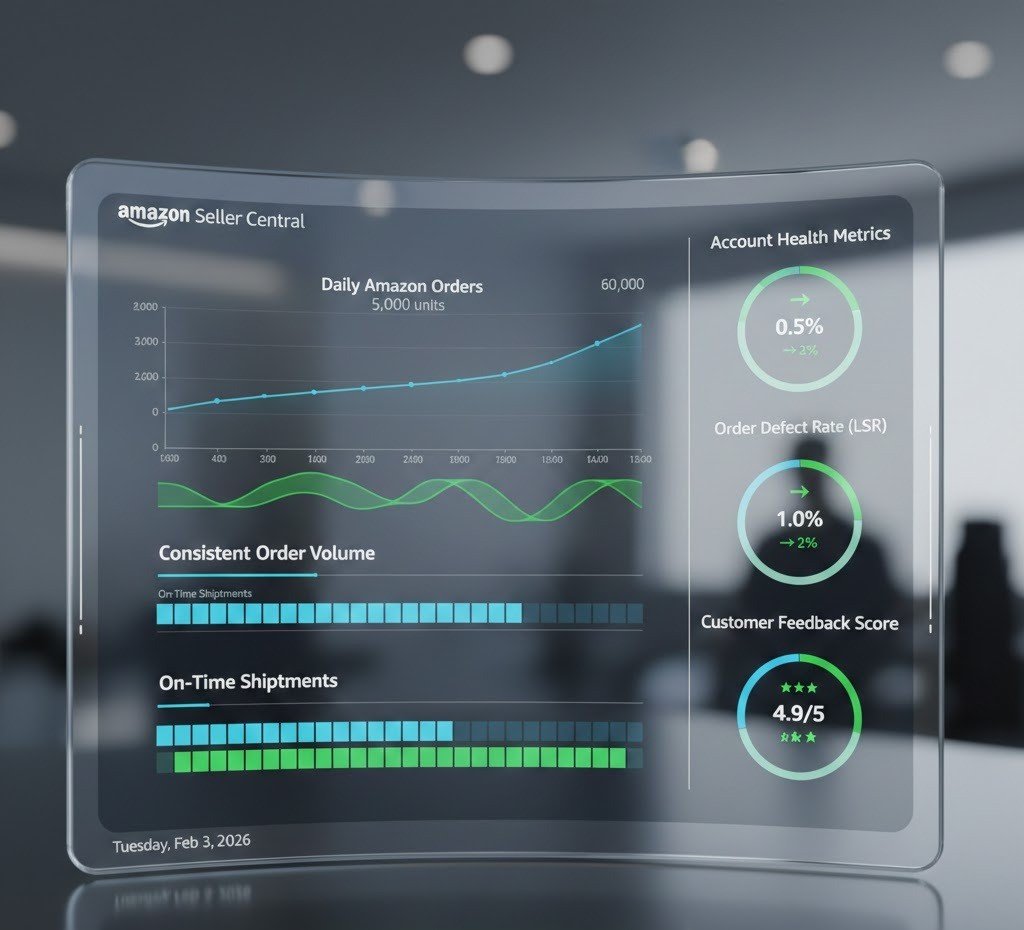
Stage 4: Operational Stability & Consistent Orders (Month 2–3)
This is the phase where Amazon selling starts to feel real.
By now:
- Listings are optimized
- Suppliers are vetted
- Fulfillment workflows are stable
- Pricing strategies are refined
Orders become more consistent, refunds decrease, and customer communication becomes predictable. This is where many sellers experience their first consistent profits, even if modest.
Key difference-maker:
Sellers with structured order management systems reach this stage faster than those handling everything manually.
Stage 5: Scaling & Real Profitability (Month 3–6)
This is where Amazon shifts from a side hustle to a business.
At this stage:
- Daily orders increase
- Margins are controlled
- Buy Box wins become more frequent
- Operational mistakes decrease
- Amazon trust signals strengthen
For many sellers, this is where meaningful profit begins—not just sales, but income that justifies the effort.
2-step dropshipping sellers with proper systems often reach this stage faster because inventory risk is lower and scaling is more flexible.
Important note:
Profitability here depends heavily on budget, model, and execution. Higher budgets and better systems usually shorten this timeline.
What Usually Delays Profit on Amazon
From our experience, sellers don’t fail because Amazon is “too hard.” They fail because of avoidable mistakes.
Common profit killers include:
- Poor supplier selection
- Inaccurate tracking uploads
- Price wars that destroy margins
- Ignoring account health warnings
- Scaling too fast without systems
Most of these issues can be prevented with proper daily management.
How Ecommatic Helps Sellers Reach Profit Faster
At Ecommatic, our goal is not hype—it’s predictable progress.
We help sellers by:
- Setting realistic expectations
- Building compliance-first workflows
- Managing daily operations
- Protecting account health
- Preventing expensive beginner mistakes
By removing operational friction, sellers can focus on strategy instead of firefighting.

Final Thoughts: Profit on Amazon Is a Process, Not a Moment
There is no single day where Amazon suddenly “becomes profitable.” It happens gradually—through better decisions, cleaner operations, and consistent execution.
For most sellers:
- Small profits appear around Month 2–3
- Stable profits appear around Month 3–6
- Scalable profits come with systems, not shortcuts
If you approach Amazon with patience and the right operational support, profitability is not a question of if—but when.
And at Ecommatic, helping sellers reach that point faster and safer is exactly what we do.