

Most Amazon sellers only look at performance metrics when something goes wrong. A warning appears. A listing gets suppressed. Or worse—account health drops suddenly without a clear explanation.
At Ecommatic, we don’t wait for problems to surface. Our virtual assistants monitor Amazon performance metrics every single week, sometimes daily, to keep stores stable, compliant, and scalable—especially for sellers using dropshipping or hybrid fulfillment models in the USA.
This article breaks down what Amazon performance metrics actually mean, which ones matter most, and how our VAs monitor them proactively to prevent account-level issues.
Why Amazon Performance Metrics Are Not Just “Numbers”
Amazon doesn’t judge sellers emotionally—it judges them mathematically.
Every shipment delay, cancellation, customer complaint, or tracking error feeds into Amazon’s internal trust score. Even if sales look strong on the surface, declining performance metrics quietly reduce visibility, Buy Box eligibility, and long-term account safety.
That’s why performance monitoring is not a monthly review at Ecommatic—it’s part of our weekly operational rhythm.
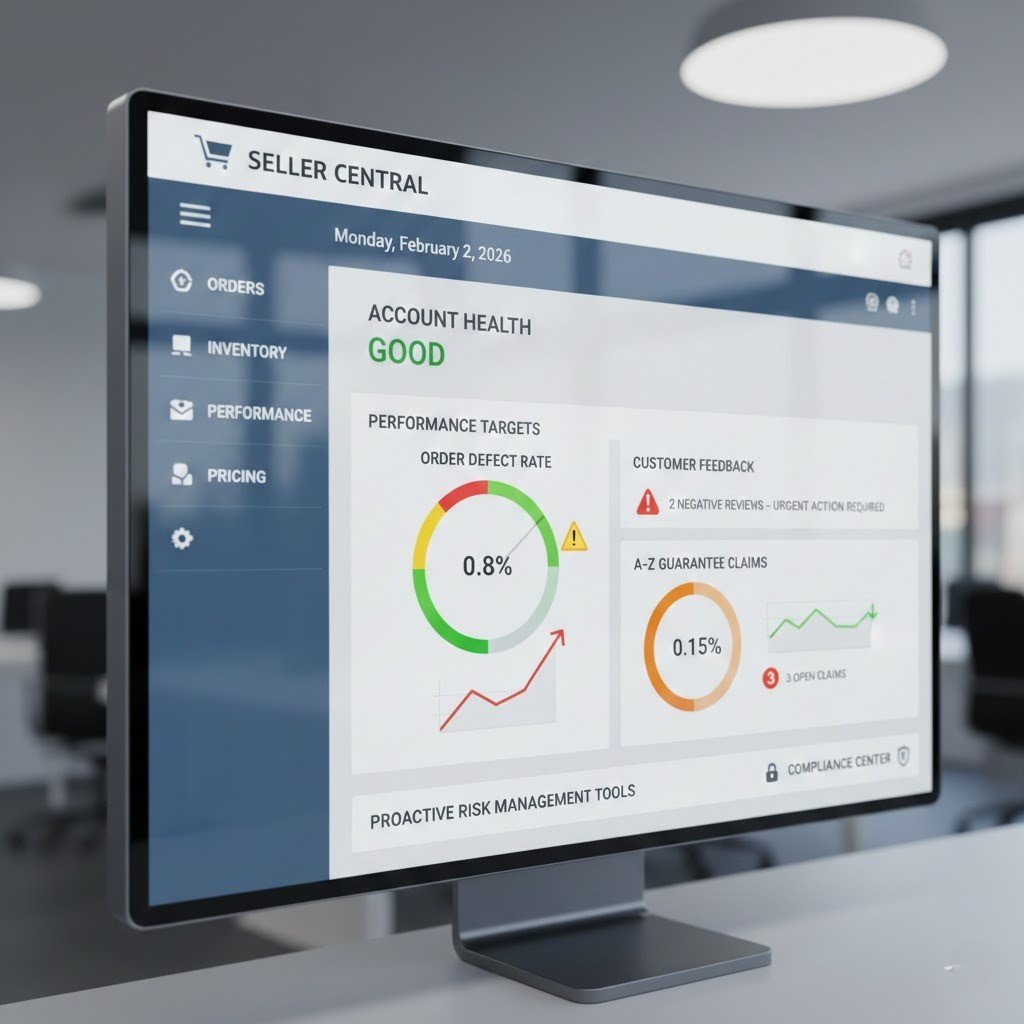
Order Defect Rate (ODR): The Most Dangerous Metric to Ignore
Order Defect Rate measures how often customers experience serious issues, including negative feedback, A-to-Z claims, or chargebacks.
Even a small spike can put an account at risk.
Every week, our VAs:
- Review all new feedback and claims
- Identify root causes behind complaints
- Trace issues back to fulfillment, supplier, or communication gaps
- Adjust workflows to prevent repeat issues
We don’t treat ODR as a “customer service issue.” We treat it as an operations signal.
Late Shipment Rate (LSR): The Silent Buy Box Killer
Late Shipment Rate tracks whether orders ship on time—not whether they arrive late.
This metric is especially sensitive for dropshipping sellers, where supplier delays can quietly damage performance.
Weekly, our VAs analyze:
- Supplier dispatch timelines
- Orders shipped close to cutoff times
- Patterns of delayed fulfillment
- High-risk SKUs or suppliers
If we see early warning signs, we reroute fulfillment, adjust handling times, or pause listings before Amazon penalizes the account.
Pre-Fulfillment Cancellation Rate: The Metric Amazon Never Forgives
Amazon treats cancellations as preventable failures.
High cancellation rates usually point to:
- Poor inventory tracking
- Unreliable suppliers
- Inaccurate listings
Each week, our VAs review cancellation data and investigate:
- Why the order was canceled
- Whether the supplier caused the issue
- Whether routing logic needs adjustment
Our goal is not just to reduce cancellations—it’s to eliminate their causes entirely.
Valid Tracking Rate (VTR): Dropshipping’s Most Critical Compliance Metric
Valid Tracking Rate is one of the biggest enforcement triggers for dropshipping sellers.
Amazon evaluates:
- Whether tracking is uploaded on time
- Whether the carrier matches the tracking
- Whether tracking becomes active quickly
- Whether delivery is confirmed
Every week, our team audits tracking performance across all fulfilled orders, identifies weak carriers or suppliers, and blocks risky tracking sources before Amazon flags them.

Customer Response Time: More Important Than Most Sellers Realize
Amazon expects sellers to respond to customer messages quickly and professionally.
Slow or inconsistent responses can:
- Trigger customer dissatisfaction
- Increase negative feedback
- Lead to claims
Weekly, our VAs review:
- Message response times
- Unanswered or delayed conversations
- Escalated buyer concerns
We adjust communication SOPs to ensure every buyer feels heard—before frustration turns into account damage.
Feedback & Review Trends: Operational Signals in Disguise
Reviews aren’t just about reputation—they reveal operational weaknesses.
Our weekly review audits focus on:
- Repeated complaints
- Product or packaging issues
- Shipping dissatisfaction
- Expectation mismatches
These insights often lead to:
- Supplier changes
- Listing content updates
- Fulfillment workflow adjustments
Buy Box Eligibility: The Performance Metric That Drives Revenue
Buy Box eligibility is directly affected by performance metrics.
Each week, our VAs check:
- Which SKUs lost Buy Box share
- Whether pricing, fulfillment, or metrics caused the drop
- How to restore competitiveness safely
This ensures sellers don’t lose sales momentum due to avoidable performance issues.
Account Health Dashboard: Weekly Risk Forecasting
The Account Health Dashboard is not just a summary—it’s a forecast.
Weekly, we:
- Review all warnings and notices
- Analyze metric trends over time
- Identify early risk signals
- Take corrective actions before enforcement
Why Weekly Monitoring Makes the Difference
Most Amazon account suspensions don’t happen suddenly. They build quietly through ignored metrics and delayed responses.
By reviewing performance metrics weekly, Ecommatic helps sellers:
- Catch problems early
- Fix root causes
- Protect Buy Box eligibility
- Maintain long-term account stability
Final Thoughts: Metrics Don’t Lie—But They Do Warn
Amazon performance metrics are not there to punish sellers. They exist to measure reliability.
At Ecommatic, our virtual assistants don’t just “watch numbers.” They interpret them, act on them, and adjust operations to keep Amazon stores healthy and profitable.
If you want your Amazon business to grow without constant fear of warnings or suspensions, weekly performance monitoring is not optional—it’s essential.
And it’s exactly how we protect our clients’ stores every week.